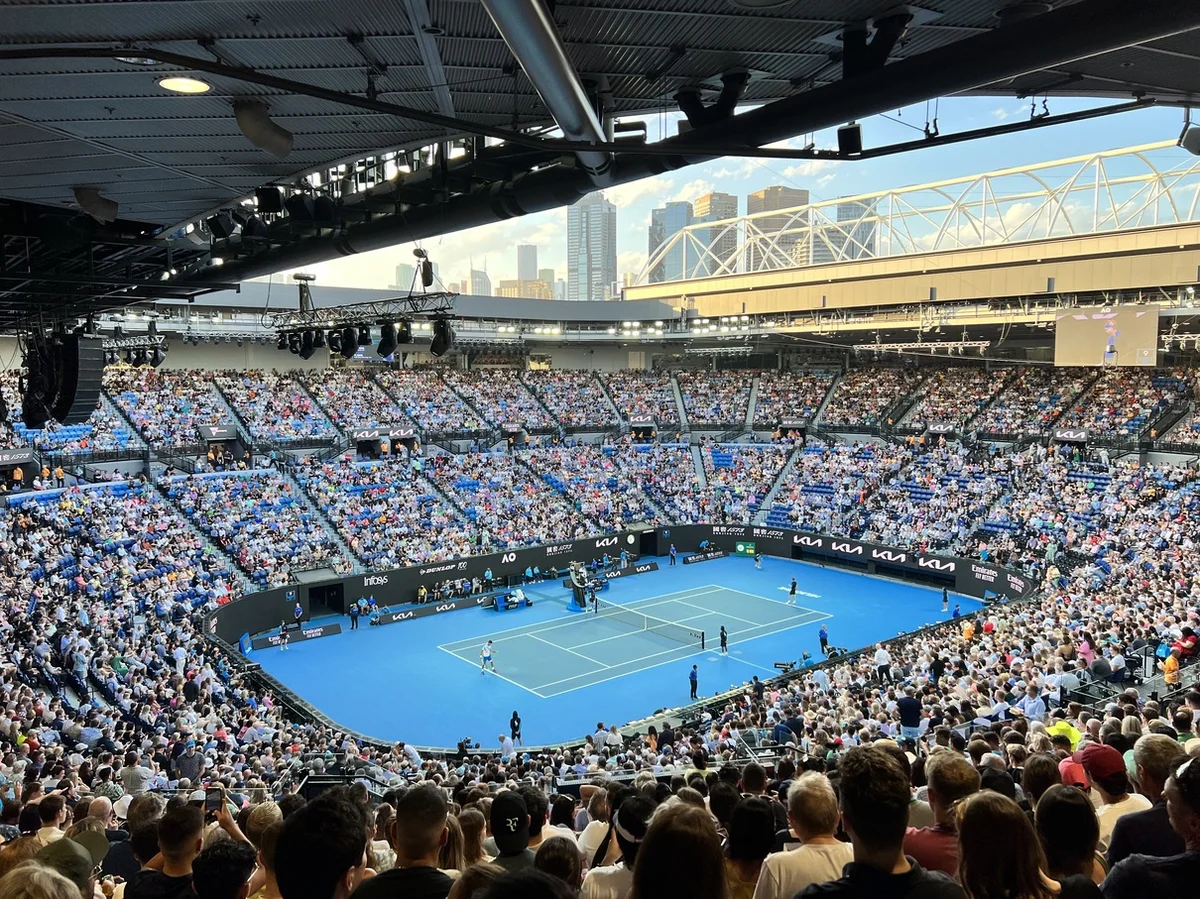
The Australian Open returns to Melbourne Park from January 18-31, 2026, with the strongest field in years assembled for tennis's opening Grand Slam. All top 10 players feature in the 128-man draw, setting up potential classics on the hard courts where careers are often defined. Carlos Alcaraz enters as the world No. 1, boasting an impressive 37-6 record on hard courts over the past 12 months. However, Jannik Sinner arrives in Melbourne as a reigning champion, riding a 15-match winning streak after ending 2025 in style. Sinner carries a near-perfect 39-3 hard court record, including a flawless 12-0 tiebreak record that could prove crucial in tight matches.
The draw sets up a mouth-watering potential final between Alcaraz and Sinner, with Novak Djokovic and Alexander Zverev lurking as the biggest threats to prevent an all-young guns showpiece. Djokovic, the 10-time Australian Open champion, has found his form at the perfect time with four straight victories, while Zverev seeks his elusive first Grand Slam title after reaching multiple major finals. With no byes in this 128-player draw, every seed must navigate a challenging first round, making early upsets a distinct possibility in what promises to be a captivating fortnight.
Quarter 1: Alcaraz start season against Walton
Carlos Alcaraz opens his title defense against Australian Adam Walton in what should be a comfortable start for the Spaniard. The world No. 1 has dominated elite competition this season with an 18-3 record against top 10 opponents, and his 43.8% break point conversion rate on hard courts gives him the edge in crucial moments. Alex De Minaur represents the home crowd's best hope in this section, though he faces a tricky opener against former top 10 player Matteo Berrettini, who won their only previous encounter.
The quarter features an intriguing clash between Tommy Paul and Aleksandar Kovacevic in the first round, with Paul's superior return game giving him the advantage. Alexander Bublik brings his unpredictable style against Jenson Brooksby, with the Kazakhstani's recent form - including latest victory in Hong Kong and making into top 10 for first time in his career - making him a dangerous contender. The American crowd favorite enters with superior tiebreak numbers at 7-4 compared to Bublik's 7-8 record, potentially crucial in their aggressive styles.
Carlos Alcaraz dominates the efficiency metrics in this section, converting strong performances into match victories at an exceptional rate. Alex De Minaur shows strength in both service and return games, reflecting his well-rounded baseline game, while Tommy Paul excels in creating break point opportunities. However, several players including Adam Walton and Flavio Cobolli show vulnerabilities in holding serve, which could lead to early exits against the section's elite players.
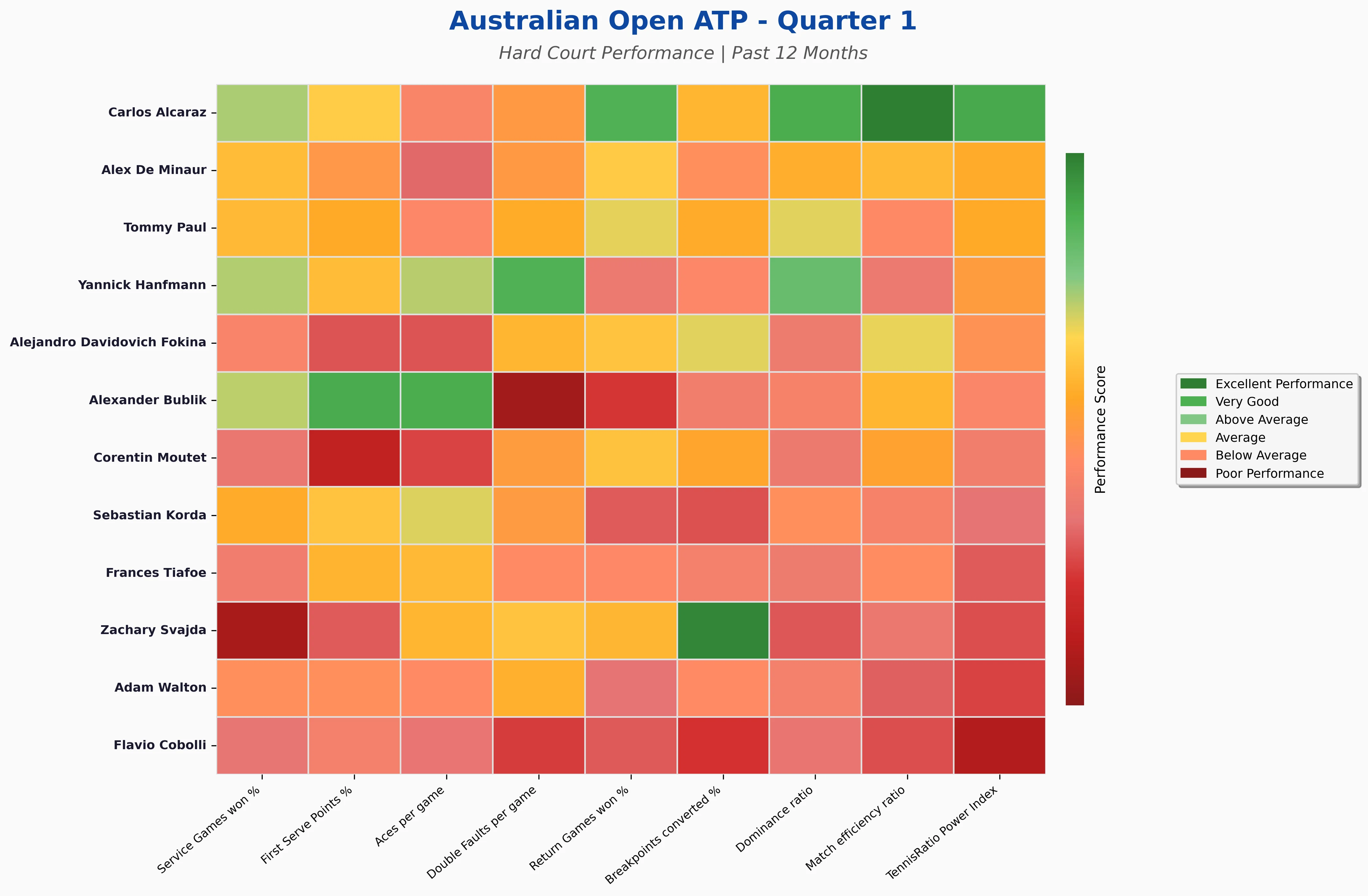
The projected quarterfinal between Alcaraz and De Minaur would replay their recent Turin encounter, where the Spaniard prevailed 7-6(5) 6-2. Alcaraz leads their head-to-head 5-1, but De Minaur's home court advantage and improved hard court form could make this closer than their recent meetings suggest.
Quarter 2: Zverev seeks breakthrough in loaded section
Alexander Zverev faces Canadian Gabriel Diallo in his opener, with the German's recent struggles against top competition (4-9 vs top 10) raising questions about his Grand Slam readiness. His 44.4% tiebreak record on hard courts could prove problematic in a section loaded with big servers. Daniil Medvedev takes on Jesper De Jong, with the Russian's dominant return statistics (33.2% first serve return points) and recent success story making him the form pick despite his No. 11 seeding.
Felix Auger Aliassime opens against Nuno Borges in a battle of contrasting styles, with the Canadian's exceptional 28-6 tiebreak record providing confidence in tight moments. Andrey Rublev faces Matteo Arnaldi, though his recent 4-6 form over 10 matches suggests vulnerability. The Russian's 1-6 record against top 10 players this season highlights his struggles against elite opposition.
Daniil Medvedev leads this section in creating break point opportunities while Alexander Zverev shows exceptional service reliability with minimal double faults. Felix Auger Aliassime excels in converting tight matches into victories, demonstrated by his superior efficiency metrics. The section's weaker players struggle significantly with service games, particularly on return points won, creating clear separation between the seeds and lower-ranked opponents.
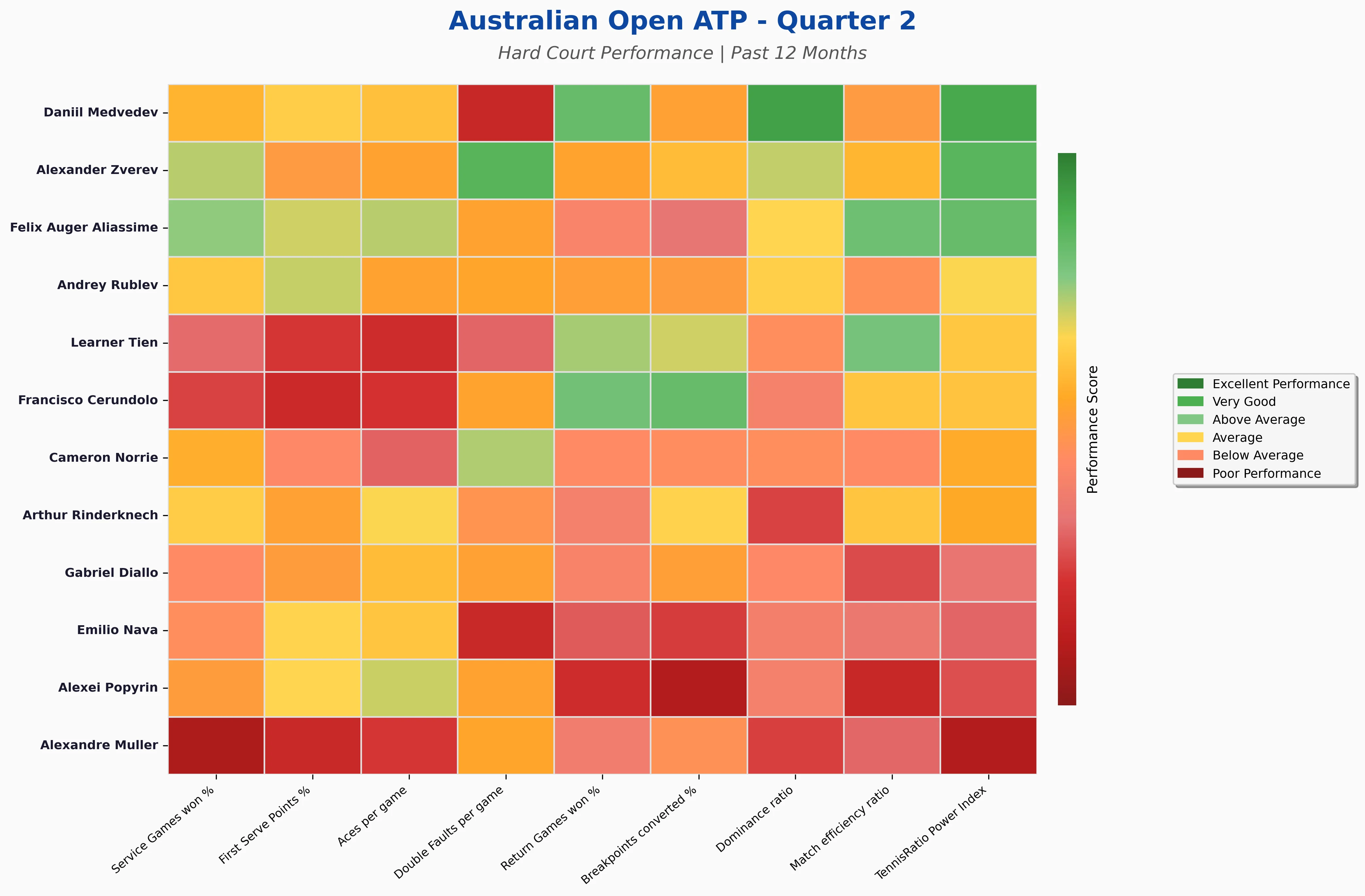
A potential Zverev-Auger Aliassime quarterfinal would be a rematch of their Turin semifinal, where the Canadian scored a stunning 6-4 7-6(4) upset. Their 6-4 head-to-head favors Zverev, but Auger Aliassime's recent dominance in tiebreaks gives him the mental edge.
The top half semifinal could see Alcaraz face either Zverev or Auger Aliassime, with the Spaniard holding winning records against both players. However, Auger Aliassime's recent victory over the world No. 1 in Turin proves he can rise to the occasion on hard courts when his serve clicks.
Quarter 3: Djokovic returns to his Melbourne kingdom
Novak Djokovic begins his quest for an 11th Australian Open title against Pedro Martinez, with the Serbian's 79.3% hard court win rate and recent four-match winning streak suggesting he's peaking at the right time. His 8-8 tiebreak record shows improvement is needed in deciding moments. Lorenzo Musetti faces Raphael Collignon, though the Italian's recent loss to Alexander Bublik in Hong Kong raises concerns about his current form.
Taylor Fritz opens against Valentin Royer, with the American's 11.8 aces per match providing free points but his recent 3-7 form over 10 matches suggesting confidence issues. Jakub Mensik takes on Pablo Carreno Busta in a clash where the Czech teenager's 14.3 aces per match could overwhelm the veteran Spaniard's steady baseline game.
Novak Djokovic demonstrates exceptional match efficiency in this section, converting quality performances into victories at the highest level. Taylor Fritz shows dominant serving metrics with impressive ace production, while Stefanos Tsitsipas combines solid first serve effectiveness with strong break point creation. Several unseeded players including Raphael Collignon and Tallon Griekspoor show significant weaknesses in service reliability, making early round upsets less likely against the established names.
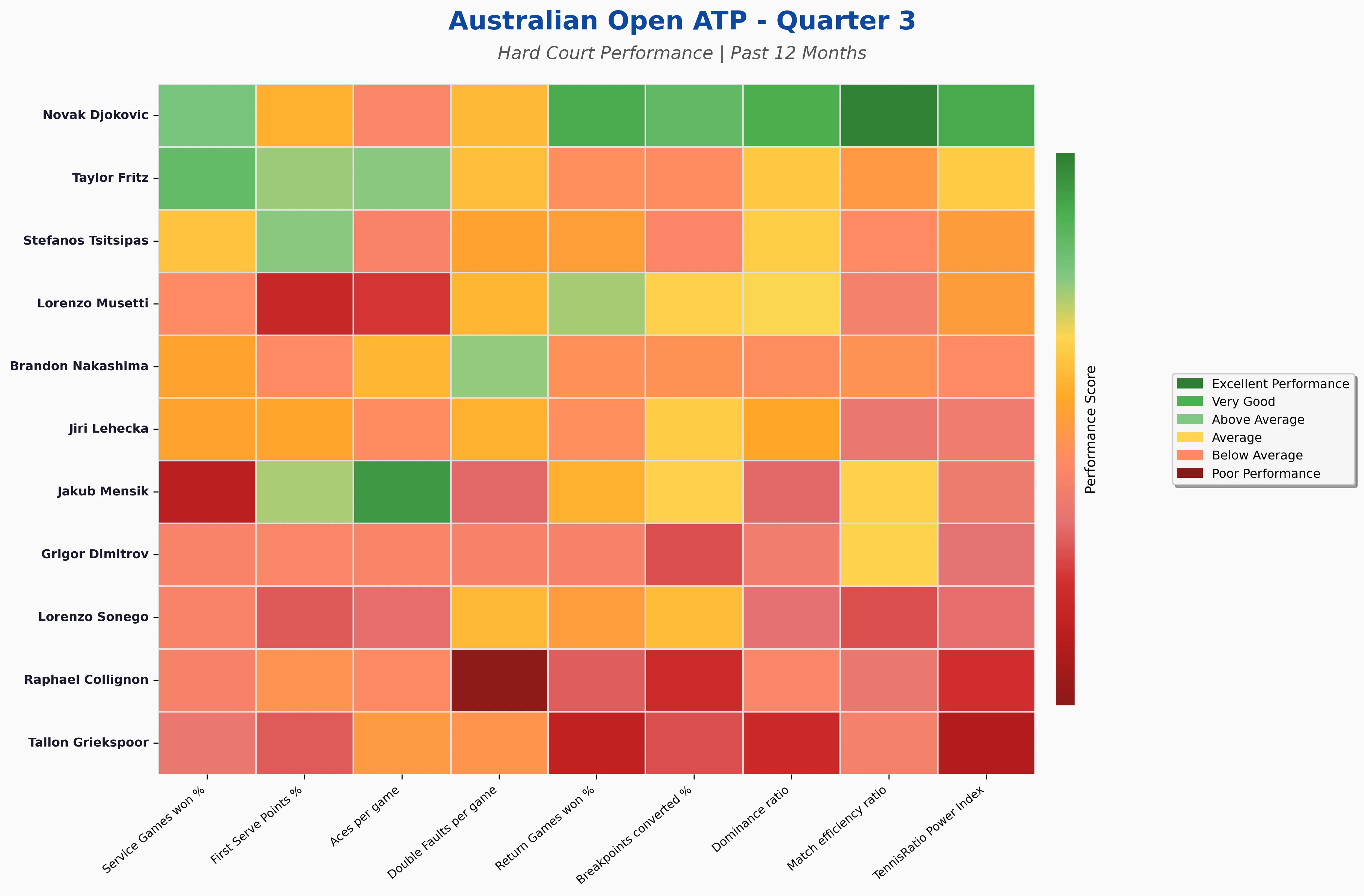
A Djokovic-Musetti quarterfinal would favor the Serbian despite their recent Athens meeting going three sets. Djokovic's Melbourne dominance and the Italian's current form struggles make this potentially one-sided, though Musetti's variety could create problems if the match reaches the later stages.
Quarter 4: Sinner's title defence quest
Jannik Sinner faces Hugo Gaston in his opener, with the Italian's perfect 15-match winning streak and flawless 12-0 tiebreak record on hard courts making him the tournament favorite. His 58.2% second serve return points won demonstrates his ability to punish weak serves. Ben Shelton opens against Ugo Humbert in a lefty-righty clash, with the American's 9.5 aces per match providing weapons but his recent 4-6 form raising questions.
Casper Ruud takes on Mattia Bellucci, though the Norwegian's hard court struggles continue with just 60.6% win rate on the surface. His superior tiebreak record (8-5) could prove decisive in tight moments. Karen Khachanov faces Alex Michelsen in a battle where the Russian's 50.0% hard court record makes him vulnerable to the rising American.
Jannik Sinner leads this section in both match control and efficiency metrics, reflecting his current dominance in world tennis. Valentin Vacherot and Casper Ruud show solid service game reliability with minimal double fault issues. However, several players including Luciano Darderi struggle significantly with service consistency and return effectiveness, creating a clear hierarchy that should favor the higher seeds advancing deep into the second week.
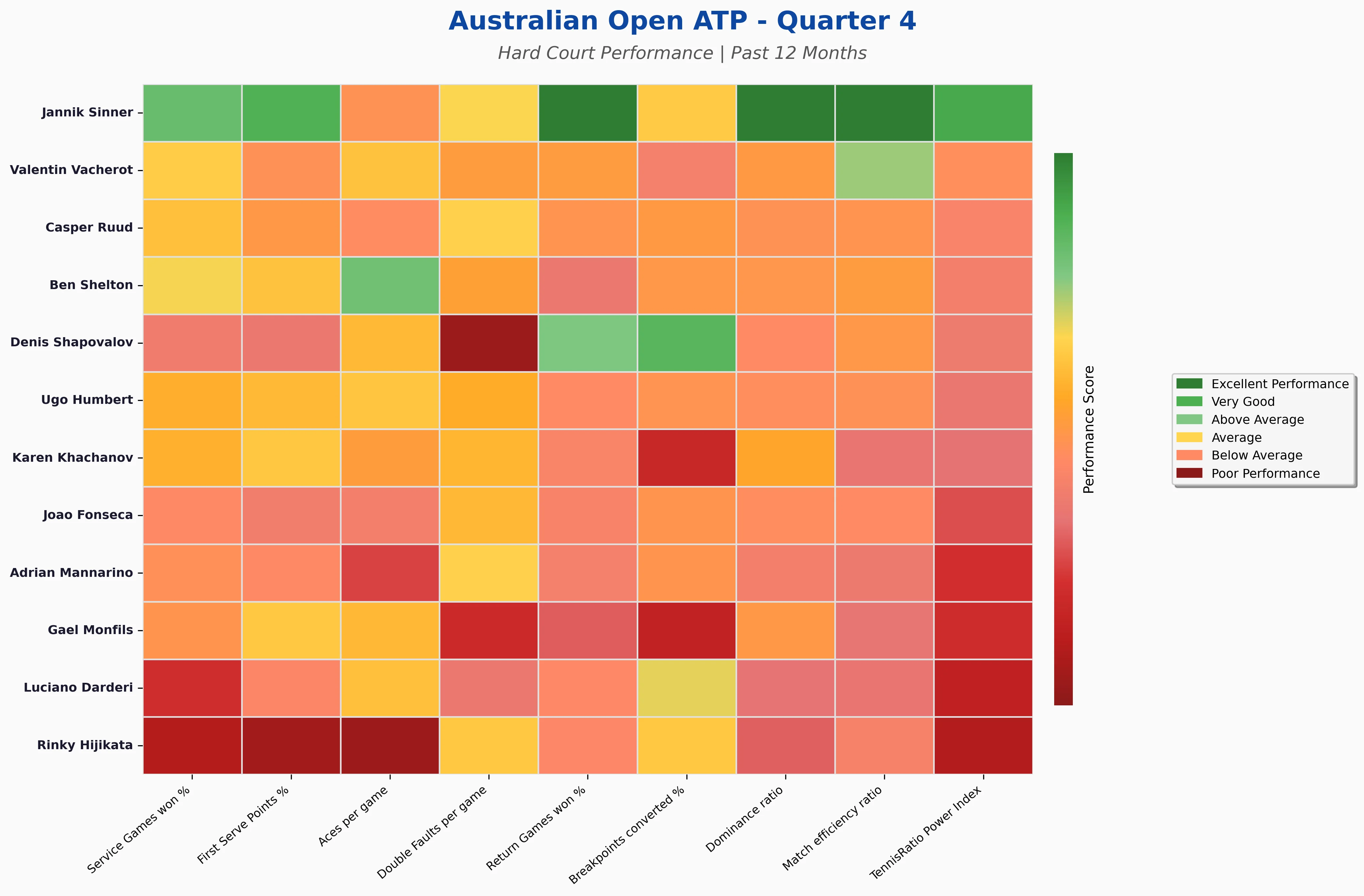
The projected Sinner-Shelton quarterfinal would replay their recent Turin meeting where the Italian won 6-3 7-6(3). Sinner's current form and superior return game should give him the edge, though Shelton's left-handed serve and power could create opportunities if he rediscovers his confidence.
The bottom half semifinal between Sinner and Djokovic would be a generational clash, with the young Italian's current form facing the Serbian's unmatched Melbourne experience. Their 4-4 career head-to-head suggests a tight encounter, though Sinner's superior recent hard court numbers give him the statistical advantage.
Sinner enters as the rightful favorite given his current form and hard court dominance, with a potential final against Alcaraz promising fireworks. Djokovic remains the most dangerous floater given his Melbourne pedigree, while Medvedev's return game could trouble anyone if his serve holds up. The tournament appears destined for a youth movement, though experience may yet have its say in the business end of the fortnight.