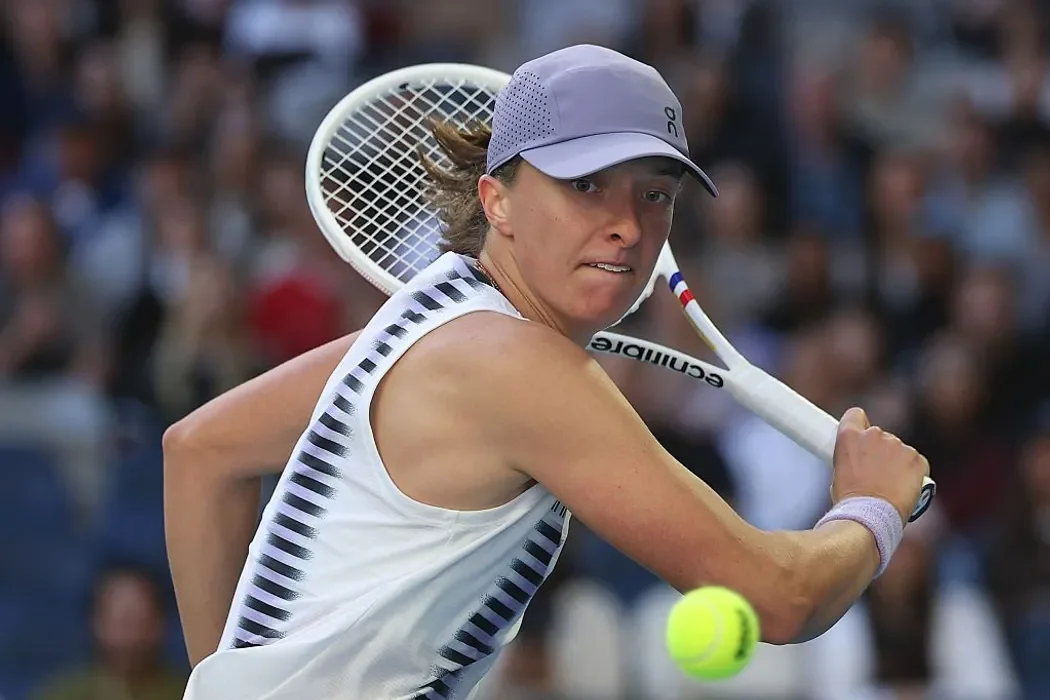
Iga Swiatek continued her remarkable Grand Slam consistency with a 6-2, 6-3 victory over Marie Bouzkova to reach her 24th consecutive major third round. The world No. 2's milestone was overshadowed by a stunning upset from teenager Nikola Bartunkova, who shocked 10th seed Belinda Bencic 6-3, 0-6, 6-4 in Melbourne. Five teenagers have now reached the third round, marking the most at a major since the 2009 US Open.
Historic teenage breakthrough shocks Melbourne
Nikola Bartunkova delivered the upset of the tournament so far, stunning 10th seed Belinda Bencic 6-3, 0-6, 6-4 to reach her first Grand Slam third round. The 19-year-old qualifier, ranked 126th in the world, recovered from a bagel second set to topple Bencic, who had won her last 12 matches entering the clash. Playing a Grand Slam main draw for the first time after winning three qualifying matches, Bartunkova joins an extraordinary youth movement that has seen five teenagers reach the third round in Melbourne. The Czech teenager showed remarkable composure in the decider, winning 10 of 24 serve pressure points while capitalizing on 12 of 26 return pressure points. Her stunning victory over the former Olympic champion caps a remarkable journey from the qualifying courts to the sport's biggest stage.
Swiatek maintains perfect Grand Slam record
Iga Swiatek extended her perfect Grand Slam second-round record in the 2020s with a commanding 6-2, 6-3 victory over Marie Bouzkova. The world No. 2 has now reached 24 consecutive major third rounds, becoming the first WTA player in the Open Era to reach the Round of 32 at the first 24 Grand Slam events of a single decade. Despite facing a brief challenge when broken early in the second set, Swiatek never appeared in serious danger against the Czech. The Pole dominated the crucial moments, winning 10 of 17 serve pressure points while excelling under pressure on return with 11 of 17. Her clinical performance in windy conditions demonstrated why she has been so reliable at the majors, maintaining her perfect 3-0 record against Bouzkova.
Anisimova cruises past former doubles star
Amanda Anisimova delivered an impressive 6-1, 6-4 victory over Katerina Siniakova to advance to the third round. The fourth seed controlled the match from the outset, breaking serve early and never allowing the Czech to find her rhythm. Despite facing 14 break points throughout the encounter, Anisimova's serve held firm when it mattered most, saving 12 of 13 break point opportunities. Her aggressive baseline game proved too powerful for Siniakova, who struggled with eight double faults. The American's clinical performance on serve pressure points - winning 29 of 41 - showcased the form that has made her one of the tournament favorites.
Defending champion Keys powers through
Defending champion Madison Keys advanced with a 6-1, 7-5 victory over fellow American Ashlyn Krueger. The ninth seed was dominant early but faced a tougher challenge in the second set, where she was broken twice before finding her rhythm in the crucial moments. Keys' power game overwhelmed Krueger in the opener, but the match tightened significantly in the second frame. The champion showed her mettle in pressure situations, winning 13 of 21 return pressure points while maintaining solid serving statistics. Her victory sets up an intriguing third-round clash with former world No. 1 Karolina Pliskova, who is making her return to Grand Slam tennis after a year-long injury layoff.
Pegula dominates in straight sets
Jessica Pegula delivered a masterclass performance, dismantling McCartney Kessler 6-0, 6-2 in just over an hour. The sixth seed was clinical throughout, converting six of nine break point opportunities while facing minimal resistance from her American compatriot. Pegula's dominance was most evident in her return game, where she won an outstanding 13 of 17 pressure points. The lopsided scoreline reflected the gulf in class between the two players, with Pegula barely troubled on serve. Her comprehensive victory continues an excellent start to the season and demonstrates the form that makes her a serious contender for a maiden Grand Slam title.
Selekhmeteva stuns former semifinalist
Oksana Selekhmeteva claimed the biggest victory of her career, upsetting 25th seed Paula Badosa 6-4, 6-4 to reach her first Grand Slam third round. The 23-year-old Russian, ranked 101st, showed remarkable resilience after returning from a seven-month shoulder injury layoff in 2023 that derailed her promising career. Selekhmeteva's creative game style - featuring disguised drop shots and double-handed slices - troubled last year's semifinalist throughout the encounter. The left-hander saved nine of 12 break points while capitalizing on crucial moments, winning 20 of 31 serve pressure points. Her stunning upset over Badosa represents a breakthrough moment for a player whose ranking had plummeted to outside the top 400 following her injury struggles.
The third round promises more compelling storylines as the youth movement continues to make waves in Melbourne, while established stars like Swiatek look to maintain their championship ambitions in the year's first major.
Looking ahead to Friday
World No. 1 Aryna Sabalenka headlines a loaded Friday at the Australian Open as the championship reaches the round of 32 stage. The defending champion faces Anastasia Potapova in what should be a routine passage to the second round, while No. 3 seed Coco Gauff takes on qualifier Hailey Baptiste. The day also features rising star Mirra Andreeva against Geabriela Ruse, plus intriguing matchups between Elina Svitolina and Diana Shnaider, and Victoria Mboko versus Clara Tauson.
Sabalenka seeks second week berth against Potapova
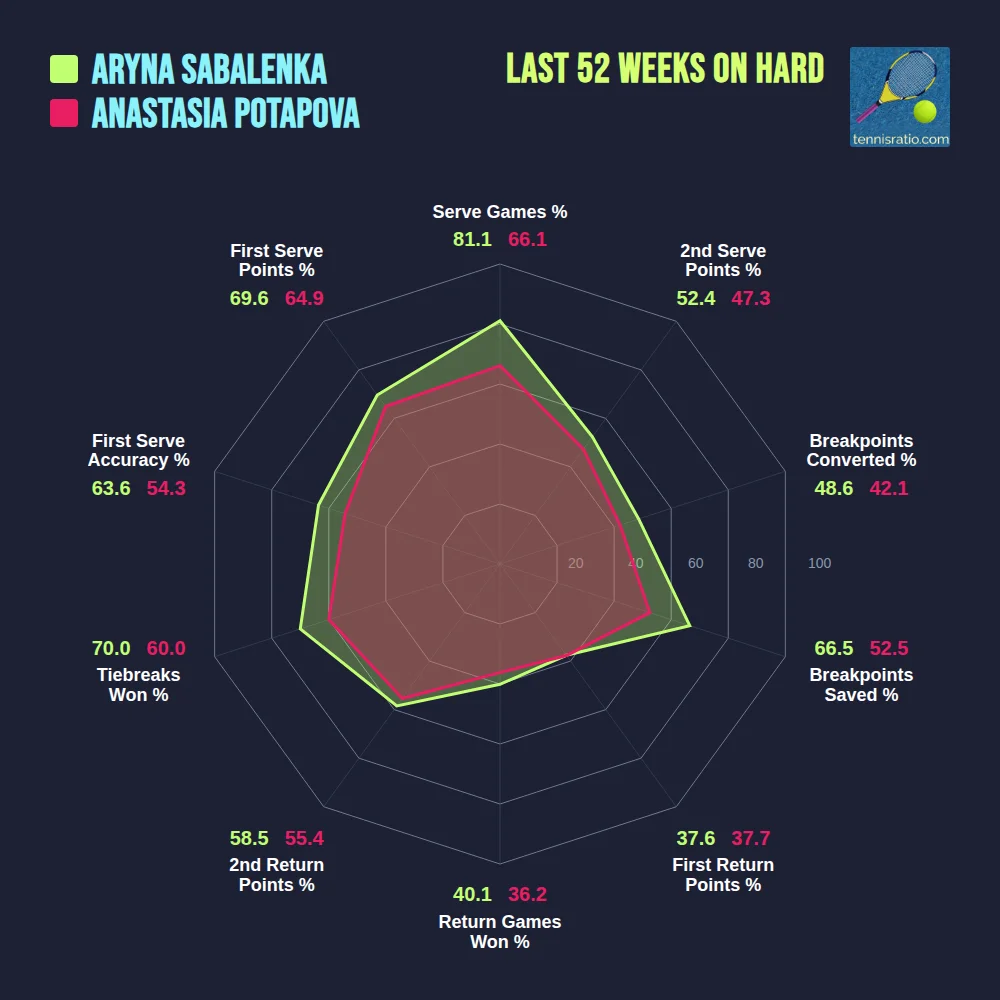
The world No. 1 enters this third round clash in imperious form, boasting a 7-match winning streak and an 84.1% win rate on hard courts over the past 12 months. Sabalenka's dominance at Melbourne Park continues, where she successfully defended her title in 2025 and looks poised for another deep run. Her serve has been a weapon of destruction, winning 69.6% of first serve points while maintaining excellent composure under pressure, saving 66.5% of break points faced.
Potapova presents an interesting challenge despite the ranking gap. The Russian has been solid on hard courts with a 58.6% win rate, though she'll need to find another gear against the world's best player. Their limited head-to-head history shows Sabalenka winning both previous encounters, including their most recent meeting in Rome last May. Potapova's serve pressure numbers (56.6% break points saved) suggest vulnerability in crucial moments against an opponent who thrives in big matches.
The key for Potapova will be keeping pace with Sabalenka's power game while limiting her own double faults (4.1 per match). However, Sabalenka's 37-7 record on hard courts over the past year tells the story - she's operating at a different level, and anything other than a comfortable passage to the quarterfinals would constitute a major upset.
Gauff aims to continue strong run against Baptiste
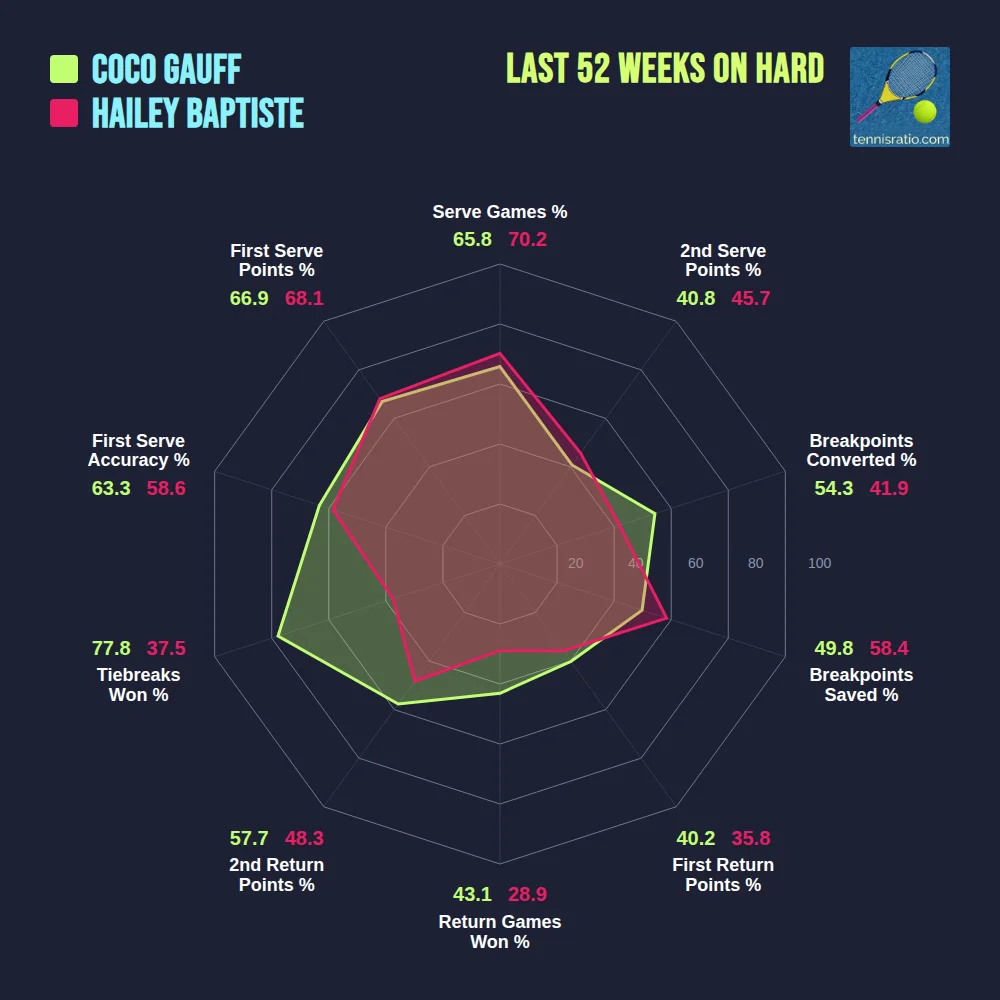
The third seed faces her biggest test yet against the determined compatriot who has already exceeded expectations by reaching the third round. Gauff arrives with momentum, riding a 4-match winning streak and showing improved consistency with a 68.4% win rate on hard courts over the past year. Her return game remains her calling card, winning 40.2% of points against first serves - a crucial statistic against an opponent who relies heavily on her serve.
Baptiste's journey to this stage has been impressive, though her overall hard court record of 43.5% suggests she's playing above her usual level. The American possesses a strong serve, averaging 4.4 aces per match, but her pressure point statistics reveal potential weakness - saving just 58% of break points could prove costly against Gauff's relentless return game.
Their only previous meeting dates back to 2023 in Washington, where Gauff prevailed comfortably. The ranking differential and form gap make this a clear favorite versus underdog scenario, though Baptiste's fearless qualifier mentality could produce some competitive moments before Gauff's superior consistency ultimately prevails.
Andreeva faces stern test against Ruse
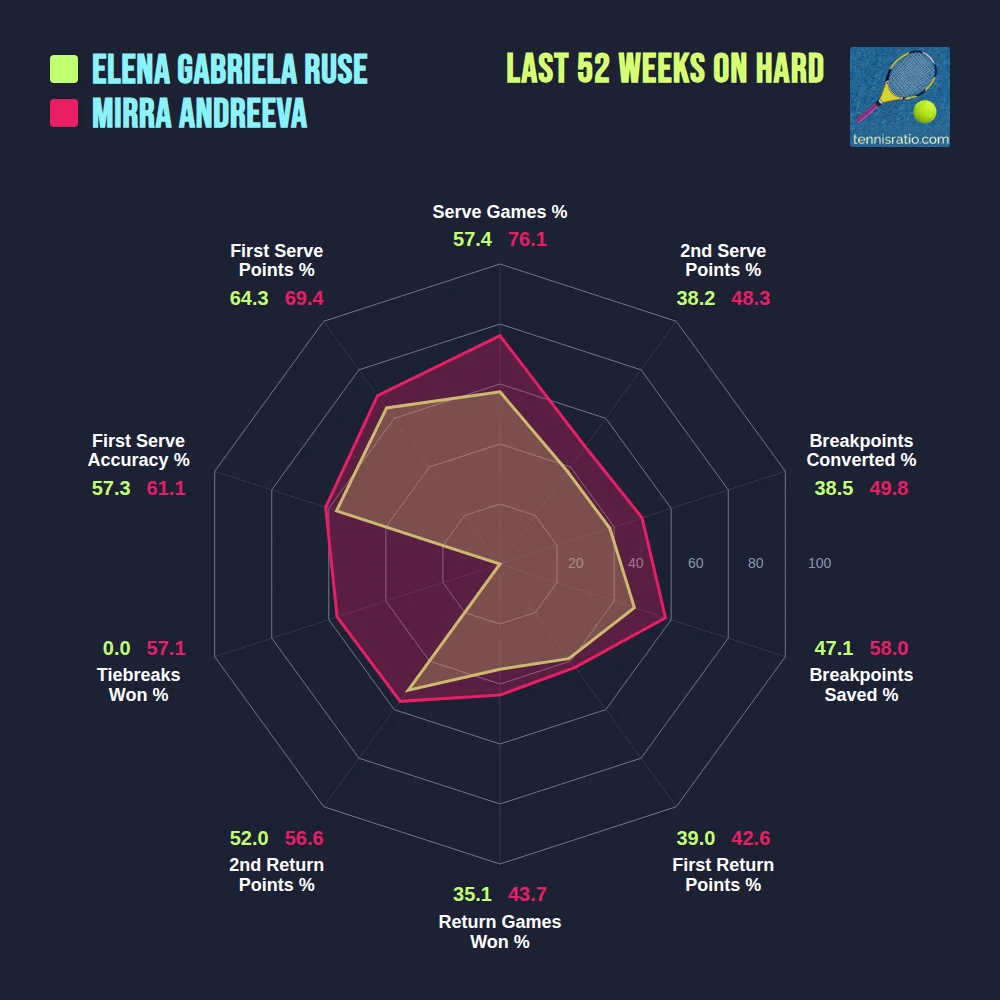
The seventh seed continues her impressive rise with an exceptional 76.5% win rate on hard courts and arrives on a 6-match winning streak. Andreeva's all-court game has been clicking perfectly, highlighted by her strong return numbers (42.6% vs first serves) and solid pressure point performance (62.8% break points saved). Ruse presents a tricky first-time opponent whose recent form (6-4 in last 10) suggests she's found some rhythm despite struggling on hard courts this past year with just a 33.3% win rate. The Romanian's complete failure in tiebreaks (0-4 record) could prove decisive if sets go the distance against the confident Russian teenager.
Svitolina battles Shnaider in intriguing clash
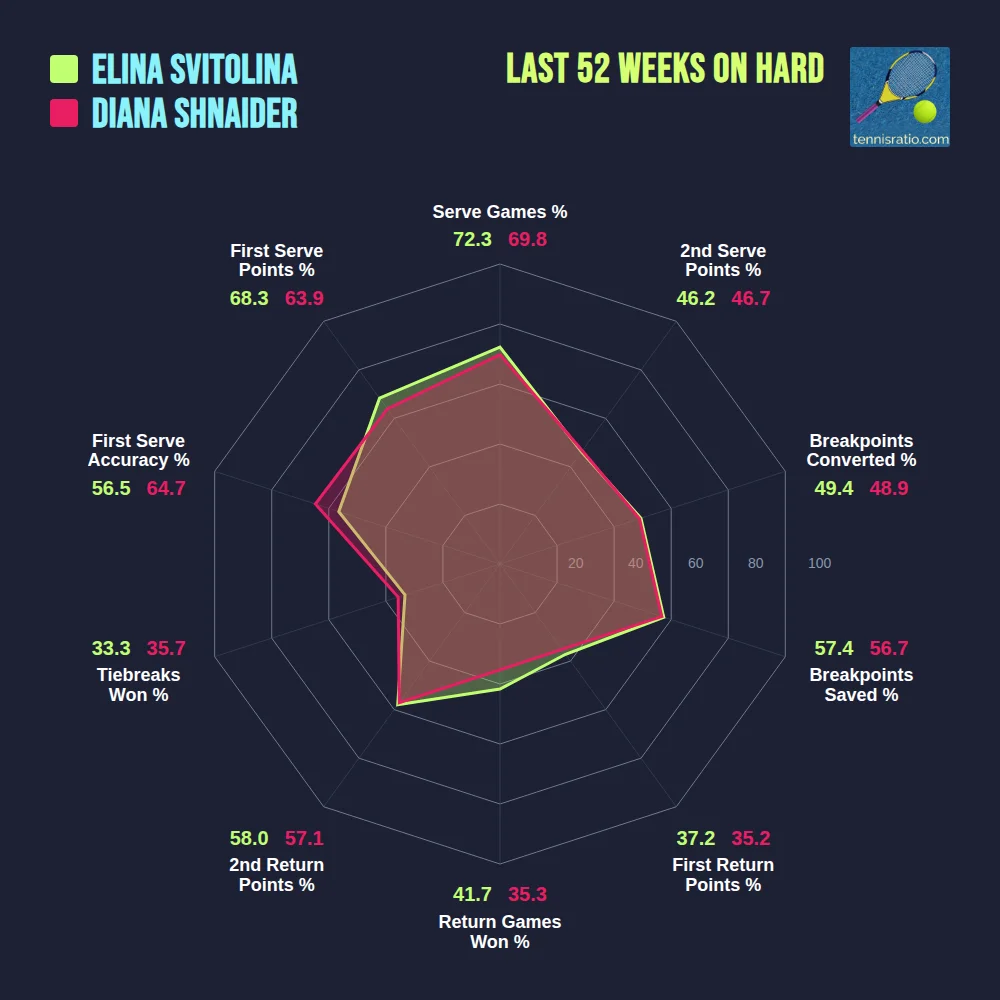
Two players in contrasting form meet as Svitolina rides a remarkable 7-match winning streak into this first-time encounter. The 12th seed has rediscovered her best tennis with an impressive 8-2 record in her last 10 matches, while her superior first serve efficiency (68.3% points won) gives her an edge over Shnaider's 63.9%. The younger Russian brings solid recent form (7-3 in last 10) but her struggles in tiebreaks (35.7% win rate) could prove problematic against an opponent finding her rhythm at the perfect time. Svitolina's experience and current momentum make her a strong favorite to advance.
Mboko and Tauson clash in the young generation showdown
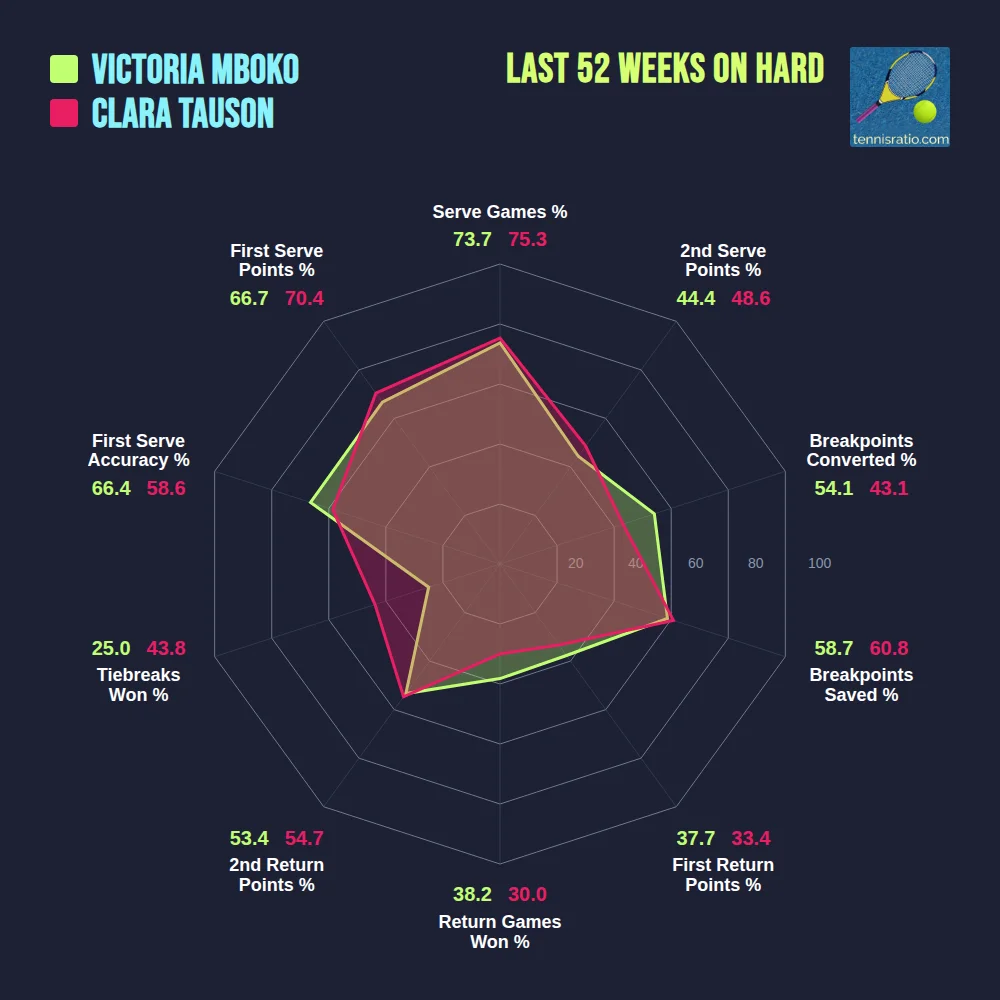
This first-time meeting between two talented players promises competitive tennis despite contrasting recent form. Mboko enters with superior hard court numbers over the past year (71.9% vs 58.3%) and arrives with strong momentum, posting an 8-2 record in her last 10 matches. The 16th seed's return pressure statistics (48.5% break points converted) could exploit Tauson's recent struggles, as the Danish player has managed just a 4-6 record in her last 10 outings. Mboko's superior form and consistency on the surface make her the narrow favorite in what should be an entertaining encounter.
Paolini looks to extend dominance over Jovic
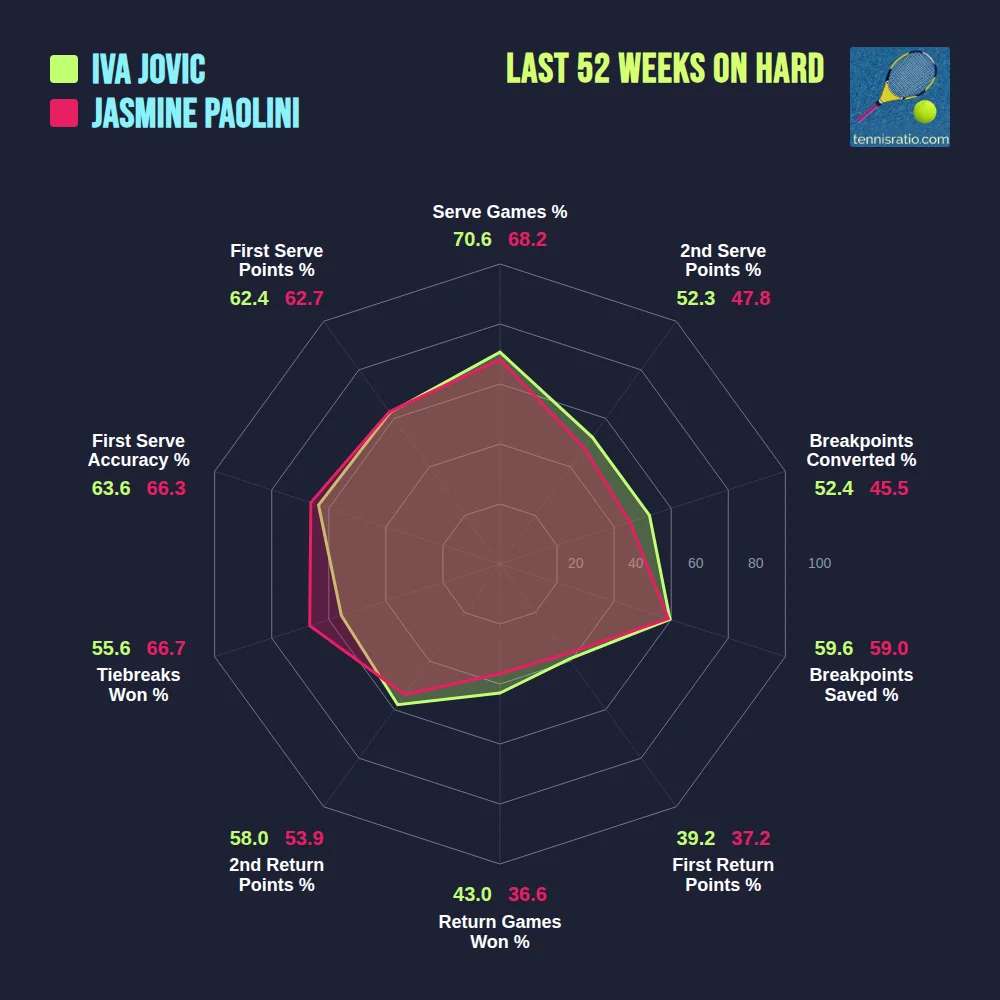
The eighth seed brings a psychological edge having won both previous meetings, including their most recent encounter at the US Open last August. Paolini's superior tiebreak record (66.7% vs 55.6%) could prove crucial in tight moments, while her lower error rate (1.6 double faults per match vs Jovic's 2.6) suggests better consistency under pressure. However, Jovic arrives in excellent form with an 8-2 record in her last 10 matches and a strong 71.4% win rate on hard courts. The Serbian's improved return numbers (52.4% break points converted) indicate she's ready to challenge Paolini's previous dominance in this matchup.
Friday's action in Melbourne promises to separate contenders from pretenders as the Australian Open reaches its business end. With favorites like Sabalenka and Gauff expected to advance, the real intrigue lies in whether rising stars like Andreeva can continue their ascent and if players like Svitolina can maintain their late-career resurgence on the sport's biggest stage.