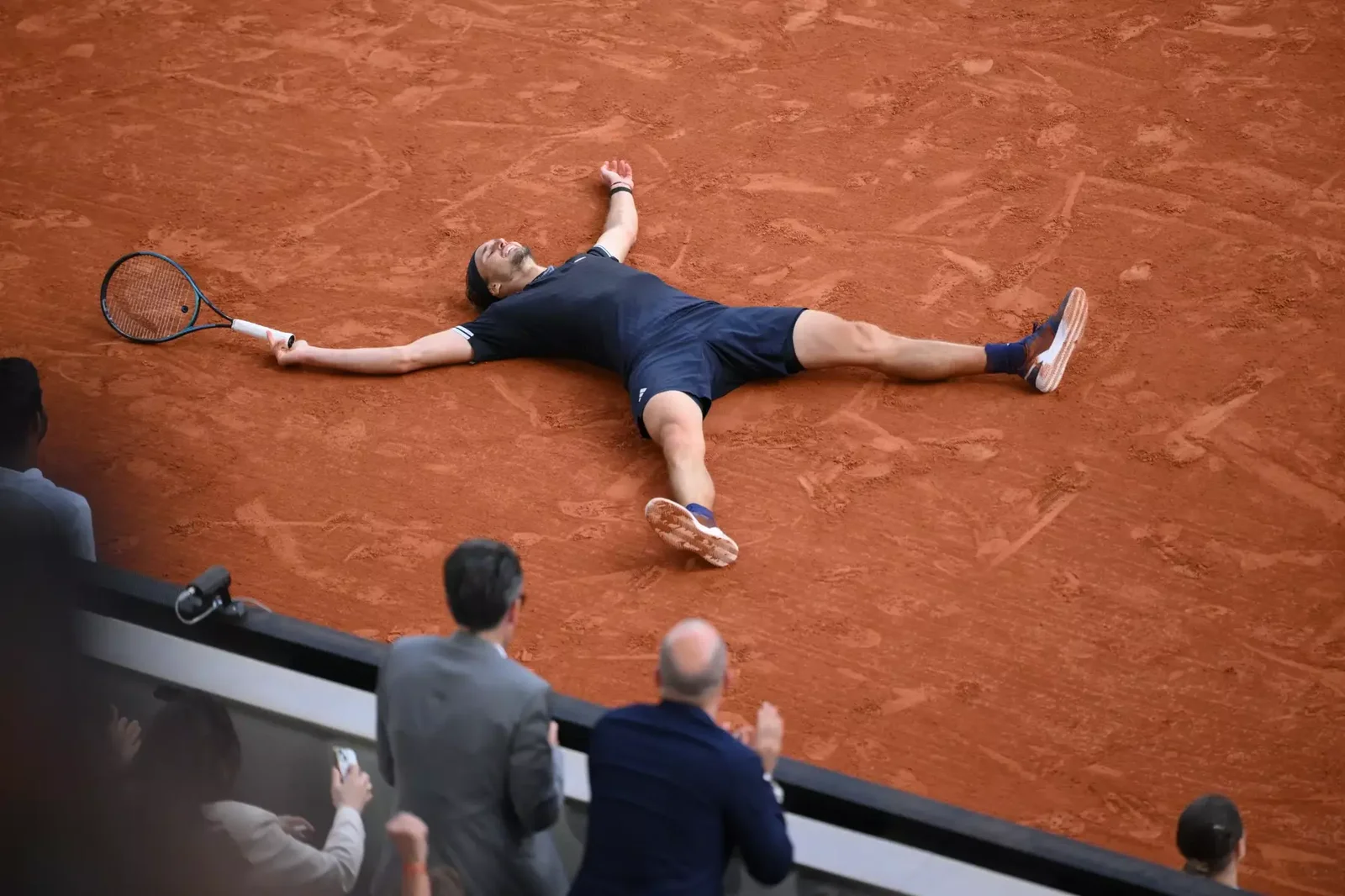
Alexander Zverev is finally a Grand Slam champion. After years spent hovering around tennis' biggest prize, the German defeated Flavio Cobolli 6-1 4-6 6-4 6-7(5) 6-1 in a chaotic, emotionally draining Roland Garros final to capture the first major title of his career at the fourth attempt.
For a player who had already won Olympic gold, the ATP Finals and 24 tour-level titles, the absence of a Slam had become the defining talking point of his career. Zverev always insisted it was not an obsession, yet the tears that followed match point suggested otherwise. After the disappointments of New York in 2020, Paris in 2024 and Melbourne in 2025, the 29-year-old finally crossed the finish line.
A final that refused to go to script
The final itself was far less straightforward than many expected. Zverev looked set for a comfortable afternoon after storming through the opening set in just 35 minutes, taking advantage of a visibly tense Cobolli and dictating play behind an outstanding serving performance. At that stage, the gap in experience appeared enormous.
Instead, the match slowly transformed into a battle of momentum swings. Cobolli settled, found rhythm on serve and began imposing himself from the baseline, turning the second set around with a run of aggressive, high-quality tennis. For long stretches thereafter, the Italian not only matched Zverev but often looked the more confident player in rallies.
The third set proved pivotal. After surviving several dangerous moments, Zverev struck at 5-4 when Cobolli briefly tightened under pressure. Yet even that did not end the drama. The Italian responded once again in a fourth set packed with twists and turns, recovering from setbacks, forcing a tiebreak and eventually dragging the final into a decider.
That was where the narrative appeared to favour Cobolli. After nearly four hours on court, Zverev looked increasingly burdened by the proximity of the title that had eluded him for so long. Instead, the German produced one final surge. He raced through the opening games of the fifth set, established a double-break lead and never relinquished control, answering long-standing questions about his ability to close out the biggest matches under the heaviest pressure.
Zverev's serve answers the lasting questions
The statistics underline the importance of his serve. Zverev landed 76% of his first serves compared to Cobolli's 53%, winning 73% of those points and constantly earning free control of rallies. Even nine double faults were not enough to derail him. More importantly, he converted nine of his 21 break-point opportunities, repeatedly capitalising on the few openings that emerged.
For Cobolli, the defeat will hurt, but it should not overshadow what has been a transformative fortnight. After never previously advancing beyond a Slam quarter-final, the Italian pushed one of the sport's elite players to the brink in his first major final, recovered from a disastrous start and repeatedly forced Zverev into uncomfortable territory.
He leaves Paris without the trophy, but with a place among the game's leading names and the belief that he belongs on this stage. Zverev leaves with something he had been chasing for more than a decade: the title that changes how his career will be remembered forever.