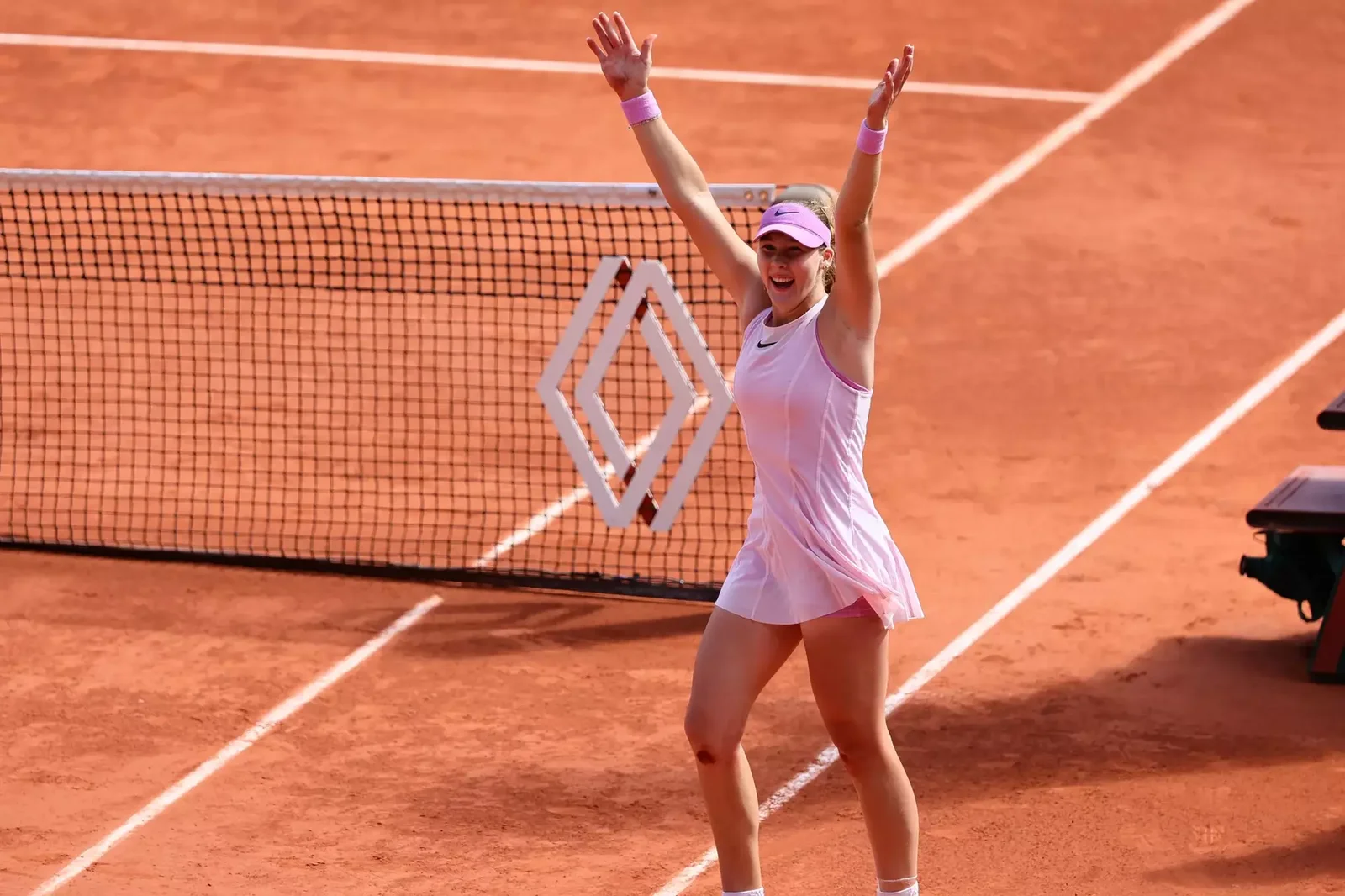
Mirra Andreeva won her first Grand Slam title at Roland Garros, overpowering qualifier Maja Chwalinska 6-3, 6-2 to become, at 19, the youngest champion in Paris since Monica Seles in 1992. After a shaky start from both players, Andreeva pulled away with nine straight games and never looked back, capping a fortnight in which she dropped just one set. For Chwalinska, the first qualifier ever to reach the Roland Garros final, defeat ended a run that had already rewritten her career and carried her from three rounds of qualifying to within one win of the title.
Andreeva dismantles Chwalinska to claim maiden Grand Slam title
Mirra Andreeva is a Grand Slam champion. The 19-year-old beat qualifier Maja Chwalinska 6-3, 6-2 in 1 hour and 22 minutes on Court Philippe-Chatrier to win her first Roland Garros title, becoming the youngest champion in Paris since Monica Seles in 1992 and the youngest major titlist since Coco Gauff at the 2023 US Open. The start was shaky on both sides, but from 3-2 Chwalinska in the first set - no break either way - Andreeva shifted into a higher gear and never came down, reeling off nine games in a row to seize control of the match. The gap was simply too wide to bridge: Chwalinska had never faced a Top 10 player before, and for all the inventive tennis that defined her run, she could not live with Andreeva's blend of power and defense at this level. Andreeva matched her craft and added everything the qualifier could not answer - a heavier serve, flatter groundstrokes and the movement to throw the moonballs, slices and lobs straight back. She controlled the key points, winning five of eight serve pressure points and converting 17 of 25 return pressure points to break the Chwalinska serve seven times in twelve chances. Winning only one of her first seven service games, and two of nine across the match, Chwalinska had no platform to compete from, and the contest was effectively settled inside the opening hour. A strong wind that punished any attempt to overhit, and more than 15 hours on court across qualifying and six rounds - nearly double her opponent's load - did her no favors, but this was Andreeva's level as much as anyone's fatigue. Andreeva did not meet a Top 10 player herself this fortnight, but that was a quirk of the rankings rather than the draw: her quarterfinal opponent Sorana Cirstea was producing the finest clay tennis of her farewell season, and semifinal victim Marta Kostyuk arrived on a 17-match winning streak. Those two, along with Andreeva, ended the clay swing as the three players with the most wins on the surface, making the back half of her draw anything but soft. The champion ends her own clay season at 22-3, a run that took in the Linz title, semifinals in Stuttgart and Madrid and the Rome quarterfinals, and she dropped just one set all fortnight in Paris - none after the second round, and no more than three games in a set from the fourth round on. She now follows her coach Conchita Martinez, the 2000 Roland Garros runner-up, onto the honor roll.
Chwalinska's historic run ends in the final
There was no fairytale ending, but Maja Chwalinska leaves Paris transformed. The No. 114 became the first qualifier ever to reach the Roland Garros final and only the third Polish woman to make a major final, after Jadwiga Jedrzejowska and Iga Swiatek. Against Andreeva she found early footing, breaking back from an immediate deficit and holding to 3-2 with the long, crafty rallies that had carried her all tournament, before the match got away from her in a rush of nine straight games. The run that brought her here was a genuine story - three rounds of qualifying and a string of wins over higher-ranked players - but it had not tested her against the elite: she beat three players ranked inside the top 30 and none inside the top 20, and the final exposed how much ground still separates those tiers. She kept trying to play on her own terms, going for the rallies and constructing her own winners rather than waiting on errors, but the wind blunted the touch shots that had undone Diana Shnaider a round earlier, and Andreeva's depth gave her nothing easy. Even so, the fortnight rewrote her career: ranked No. 114 on arrival, she is assured of a climb toward the top 20, having come further from qualifying than any woman before her at Roland Garros.
Ranking movements
Clay swing changes the narrative on top of the WTA field. Mirra Andreeva becomes the new WTA Race leader for 2026 season, having not just the biggest amount of wins on clay but also in general with 36 match victories. Her maiden Grand Slam victory allows her to advance just by two places into 6th in official WTA Rankings, but Andreeva jumps by 4 places in WTA Race ahead of Aryna Sabalenka and Elena Rybakina who lost her top spot in Race and dropped down to third after sensational early exit in Roland Garros second round. The Belarusian keeps her lead in WTA Rankings with 9090 points under her name, about 900 points ahead of Rybakina and more than 2k points ahead of Iga Swiatek. Last year's champion Coco Gauff loses three spots sliding down to 7th.
Maja Chwalinska notes probably the most impressive advance in the WTA Rankings since years, as the Pole who was never ranked in top 100 before, gains 93 places to get into 21st spot. Chwalinska is also 14th in WTA Race after just two main tour victories in Cluj Napoca earlier in 2026.
Marta Kostyuk met the expectations as one of the title contenders, making into semifinals. Kostyuk got beaten by Andreeva in one-way traffic match, but she advances into her career's best 12th place up from 15th. Diana Shnaider's surprising run into semis gives her the boost of 7 places to 16th. The quarterfinalist Anna Kalinskaya is another one who comes back to top 20.