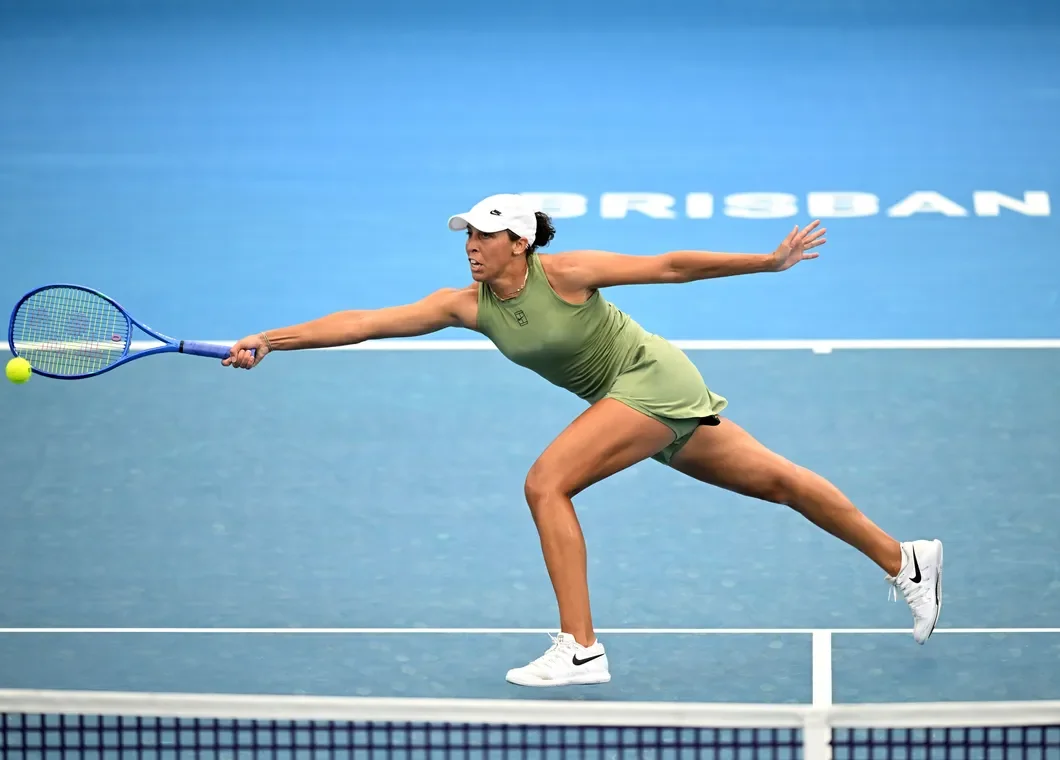
The 2026 season began with stunning upsets and emotional comebacks as Marta Kostyuk delivered the day's biggest shock, defeating world No. 3 Amanda Anisimova 6-4, 6-3 in Brisbane. Meanwhile, Elena Rybakina continued her perfect start to the season, defeating returning Paula Badosa 6-3, 6-2 in the Spaniard's first competitive match since an injury-plagued 2025. The day's most dramatic encounter saw Madison Keys survive the first triple-tiebreak match of her career, edging Diana Shnaider in a nearly three-hour thriller.
Kostyuk stuns Anisimova with clinical performance
Ukrainian Marta Kostyuk produced the upset of the day, dismantling world No. 3 Amanda Anisimova 6-4, 6-3 to reach the Brisbane quarterfinals. The world No. 26 was virtually flawless under pressure, winning 11 of 17 serve pressure points while capitalizing ruthlessly on return opportunities with 11 of 28 return pressure points. Kostyuk, who has set her sights on breaking into the top 10 this season with increased power and aggressive play, demonstrated exactly those qualities against the American. She struck six aces and saved five of six break points faced, converting four of nine break point opportunities to seal a statement victory. The Ukrainian's dominant serving display, winning 76% of first serve points, gave Anisimova few chances to establish rhythm. This result continues Kostyuk's upward trajectory as she looks to build on her career-high ranking achieved in 2025.
Rybakina rolls past returning Badosa
Elena Rybakina remained unbeaten to start 2026, defeating Paula Badosa 6-3, 6-2 in what marked the Spaniard's emotional return to competitive tennis. Badosa, playing her first match since an injury-plagued 2025 that saw her drop from No. 12 to No. 25 in the rankings, showed flashes of the form that once took her to No. 2 in the world but ultimately couldn't match Rybakina's clinical precision. The former world No. 2 had dealt with persistent back issues throughout 2025, managing only two matches after Wimbledon before shutting down her season. Following the longest preseason of her career, Badosa was determined to prove her fitness and stay healthy, but Rybakina's exceptional serving proved too much. The Kazakhstani won an impressive 81% of first serve points and converted five of eight break chances. Rybakina controlled the pressure moments, winning seven of 11 serve pressure points and 13 of 31 return pressure points to advance to the quarterfinals.
Keys survives historic triple-tiebreak thriller
Madison Keys produced one of the most dramatic comebacks of the early season, rallying from a set and 4-2 down to defeat Diana Shnaider 6-7(5), 7-6(5), 7-6(4) in the first triple-tiebreak match of her career. The nearly three-hour battle marked just the 12th triple-tiebreak scoreline on the WTA Tour this decade, with both players receiving medical attention during the contest. Keys was treated off court after winning the second set, while Shnaider received treatment for her left wrist while trailing 3-2 in the decider. The American's power game ultimately proved decisive, as she finished with 38 winners including nine aces. Keys dominated the pressure moments, winning 19 of 30 serve pressure points while converting 11 of 28 return pressure opportunities. The victory sets up a mouthwatering quarterfinal against top seed Aryna Sabalenka, a rematch of last year's Australian Open final.
Andreeva edges Noskova in three-set battle
Mirra Andreeva continued her impressive rise, defeating Linda Noskova 5-7, 6-4, 7-5 in another grueling three-set encounter. The young Russian showed tremendous mental fortitude, recovering from dropping the opening set to outlast her Czech opponent in two hours and 45 minutes. Andreeva's serving was particularly impressive in the final two sets, finishing with nine aces while saving six of nine break points faced. The world No. 9 proved clutch under pressure, winning 18 of 29 serve pressure points and converting 12 of 25 return pressure opportunities. Both players struggled to hold serve consistently early on, but Andreeva found another gear when it mattered most, breaking serve at crucial moments in both the second and third sets to advance to the quarterfinals.
Pegula completes American double in Brisbane
Jessica Pegula made a successful Brisbane debut, overcoming Dayana Yastremska 5-7, 6-2, 6-3 in her second three-set win to start the season. The American world No. 6 showed her trademark resilience, bouncing back from dropping the opening set to dominate the final two frames. Pegula found her rhythm after the slow start, winning 15 of 25 serve pressure points while capitalizing on 17 of 38 return pressure opportunities. The Buffalo native converted six of 12 break point chances and struck five aces in the victory. Her experience showed in the crucial moments, as she raised her level significantly from the second set onwards to book her place in the quarterfinals alongside compatriot Keys.
Thursday's action will see the Brisbane quarterfinals take center stage, with Keys facing top seed Aryna Sabalenka in a rematch of last year's Australian Open final, while the United Cup knockout rounds continue in Perth with Team USA taking on Greece.
Friday's key matchups
World No. 1 Aryna Sabalenka takes center stage on Friday as she battles Madison Keys in a blockbuster Brisbane quarterfinal that could shape the pre-Australian Open landscape. The Belarusian leads their head-to-head 5-2 and arrives with an 83.7% win rate on hard courts over the past 12 months. Meanwhile, Iga Swiatek continues her United Cup campaign against Maya Joint, while Elena Rybakina looks to extend her 13-match winning streak in Brisbane. With quarterfinal spots and momentum on the line across three tournaments, Friday promises compelling storylines heading into the year's first major.
Power clash headlines Brisbane quarters
The marquee matchup of the day pits two of the game's biggest hitters against each other as Sabalenka seeks to maintain her dominance over Keys in their Brisbane quarterfinal. The world No. 1 has won their last encounter at Indian Wells in March 2025 and holds a commanding 4-1 advantage on hard courts between the pair.
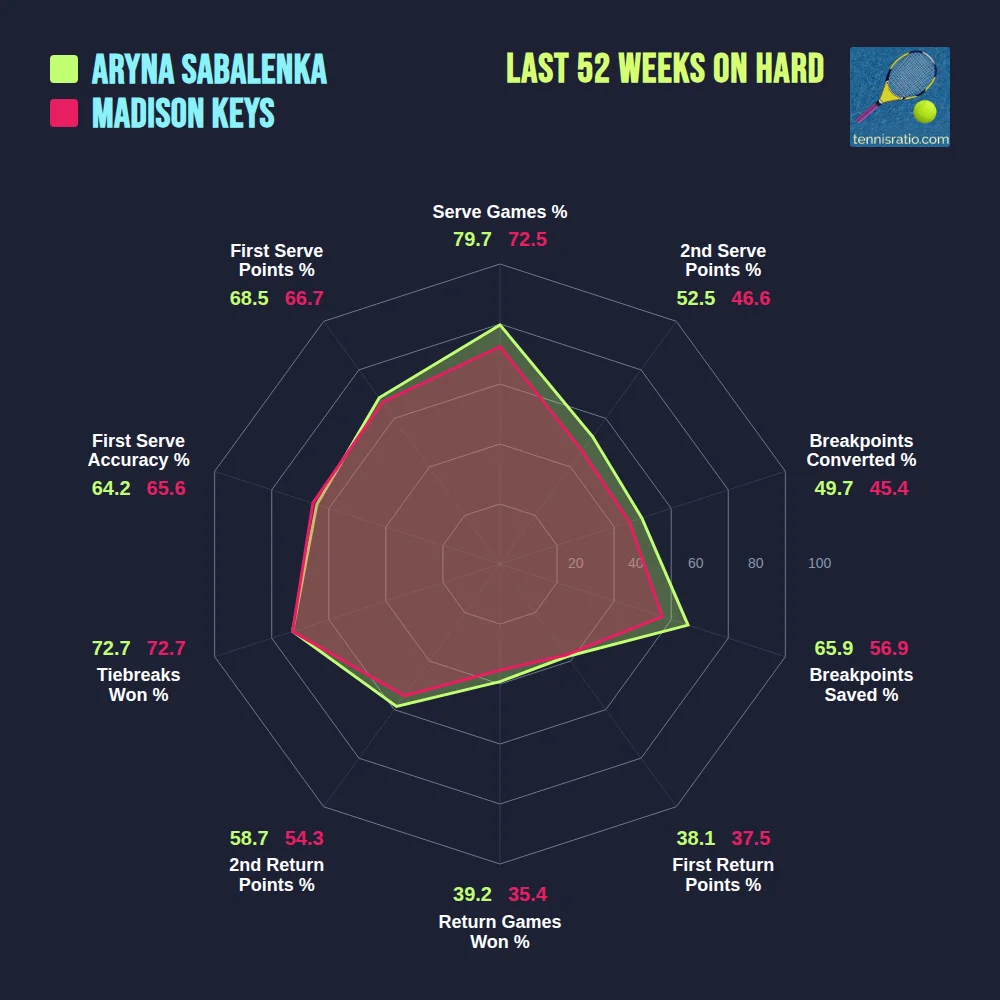
What makes this clash fascinating is the contrast in pressure point performance. Sabalenka saves 63.4% of break points faced, demonstrating the clutch serving that has defined her recent success. Keys, however, has been more volatile in crucial moments, saving just 58.5% of break points over the past year. The American's serve has generated more aces per match (4.9 vs 4.0) but also significantly more double faults (4.3 vs 1.9), highlighting the high-risk approach that can either overwhelm opponents or self-destruct. Keys arrives with a 5-5 record in her last 10 matches compared to Sabalenka's 8-2 mark, suggesting the defending champion has found her groove at the perfect time.
Rybakina's streak meets Muchova's resilience
Elena Rybakina brings a perfect 10-0 record in her last 10 matches into her Brisbane quarterfinal against Karolina Muchova, but the Czech presents a unique challenge with their head-to-head locked at 1-1. Rybakina's 13-match winning streak has been built on devastating serve performance, winning 75.6% of first serve points and averaging 7.4 aces per match over the past year.
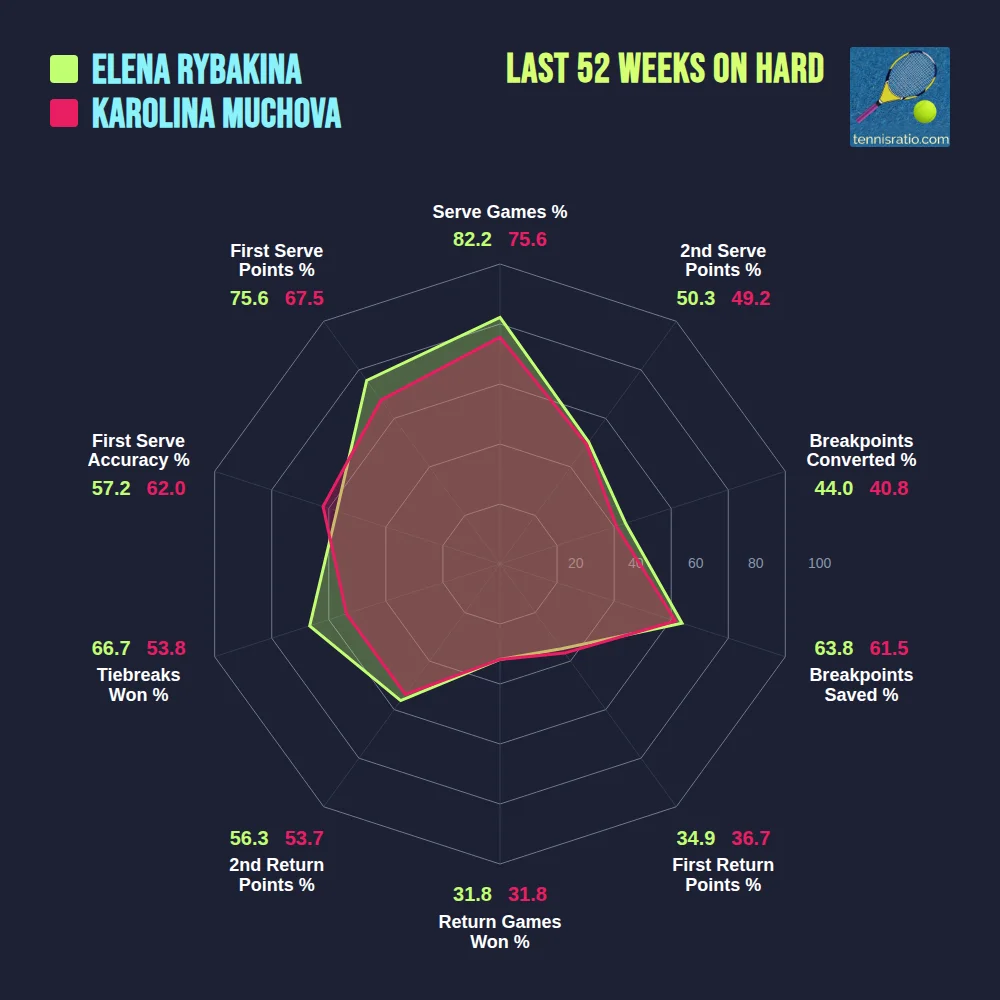
Muchova's path to victory lies in her superior tiebreak composure and return game. While she posts a modest 53.8% tiebreak win rate compared to Rybakina's 66.7%, her ability to read the big serve and create break point opportunities could prove decisive. The Czech converts break points at a 43.0% clip under pressure, while Rybakina's return pressure sits at 41.8%. With Muchova showing a 6-4 record in her last 10 outings, she arrives with enough form to test the streaking Kazakh.
Pegula aims to reverse hard court history
Jessica Pegula faces a stern test against Liudmila Samsonova in Brisbane, despite holding a 4-2 career advantage. The American's perfect 3-0 record against the Russian on hard courts should provide confidence, but Samsonova arrives having won their most recent encounter in Berlin.
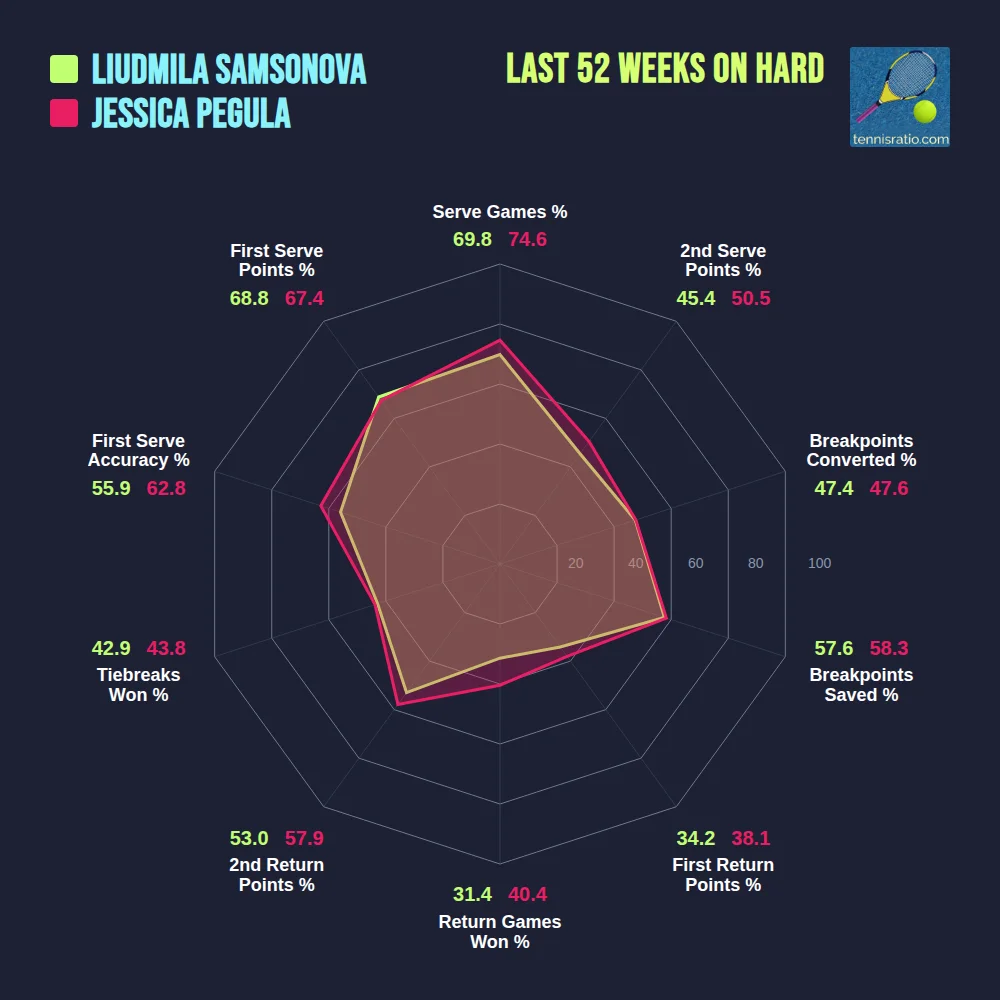
The statistics favor Pegula's consistent approach over Samsonova's boom-or-bust style. The American posts a 73.6% hard court win rate over the past 12 months compared to Samsonova's 54.8%, while also showing superior return numbers against both first (38.1% vs 34.2%) and second serves (57.9% vs 53.0%). Samsonova's 4.5 aces per match give her weapons to hurt Pegula, but the Russian's 3.9 double faults per match could prove costly against such a steady opponent.
Swiatek continues United Cup charge
Iga Swiatek looks to build on her four-match winning streak when she faces Maya Joint at the United Cup. The world No. 2 won their only previous meeting in Seoul last September and brings a 78.0% hard court win rate from the past year into this encounter.
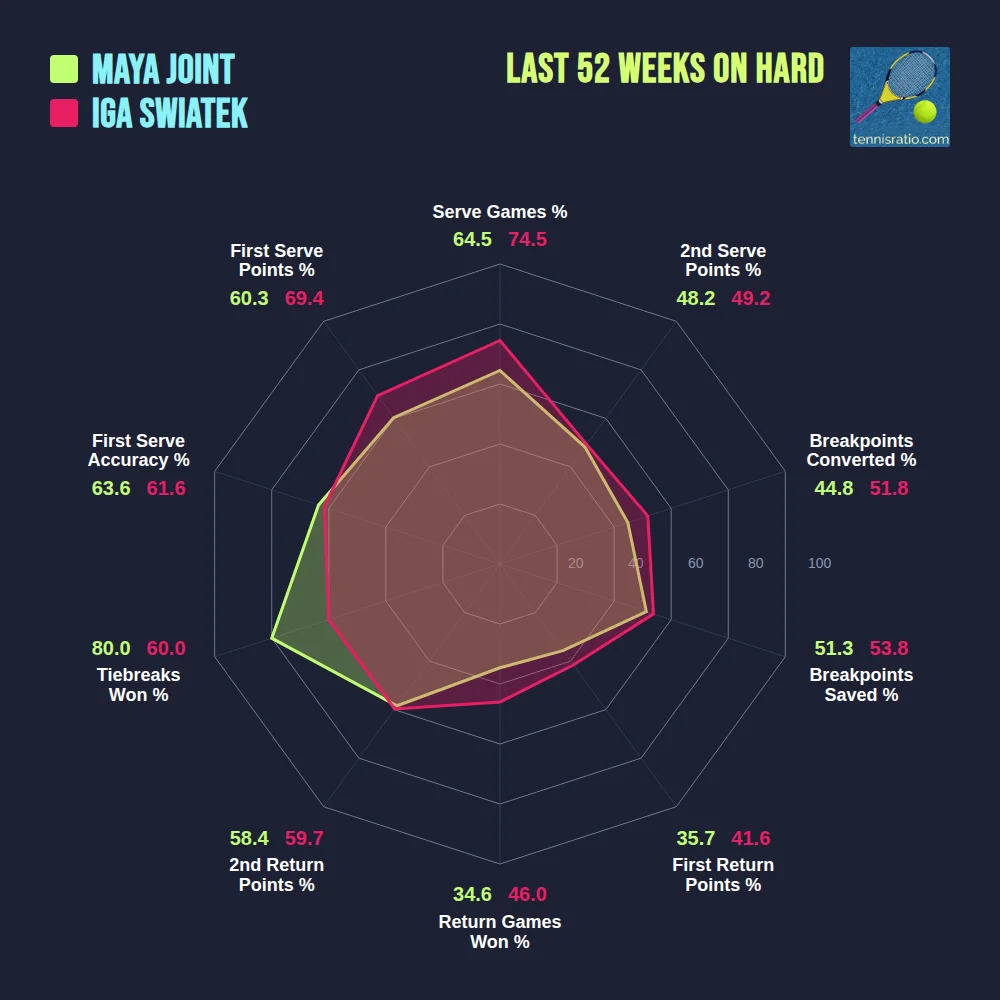
Joint's 80.0% tiebreak record over the past 12 months could prove valuable if she can extend rallies, but Swiatek's superior return game (41.6% vs 35.7% against first serves) should create regular break point opportunities. The Polish star converts 49.2% of break points under pressure, significantly higher than Joint's 44.9% mark.
Auckland quarters feature familiar foes
In Auckland, Magda Linette seeks to maintain her 2-0 head-to-head record against Alexandra Eala, having won their most recent encounter at Nottingham in June 2025. Despite posting just a 50.0% hard court win rate over the past year, Linette's 83.3% tiebreak record could prove decisive against the Filipino rising star.

Eala's superior return numbers against second serves (62.4% vs 52.9%) give her a pathway to breaks, but Linette's experience in tight moments should serve her well. Both players arrive with identical 5-5 records in their last 10 matches, setting up an intriguing battle between experience and emerging talent.
Friday's action across three continents will significantly shape the pre-Australian Open narrative, with Brisbane's quarterfinals potentially reshuffling seeding expectations while United Cup and Auckland provide crucial match practice. Rybakina's winning streak and Sabalenka's title defense headline a day that could define early 2026 momentum.