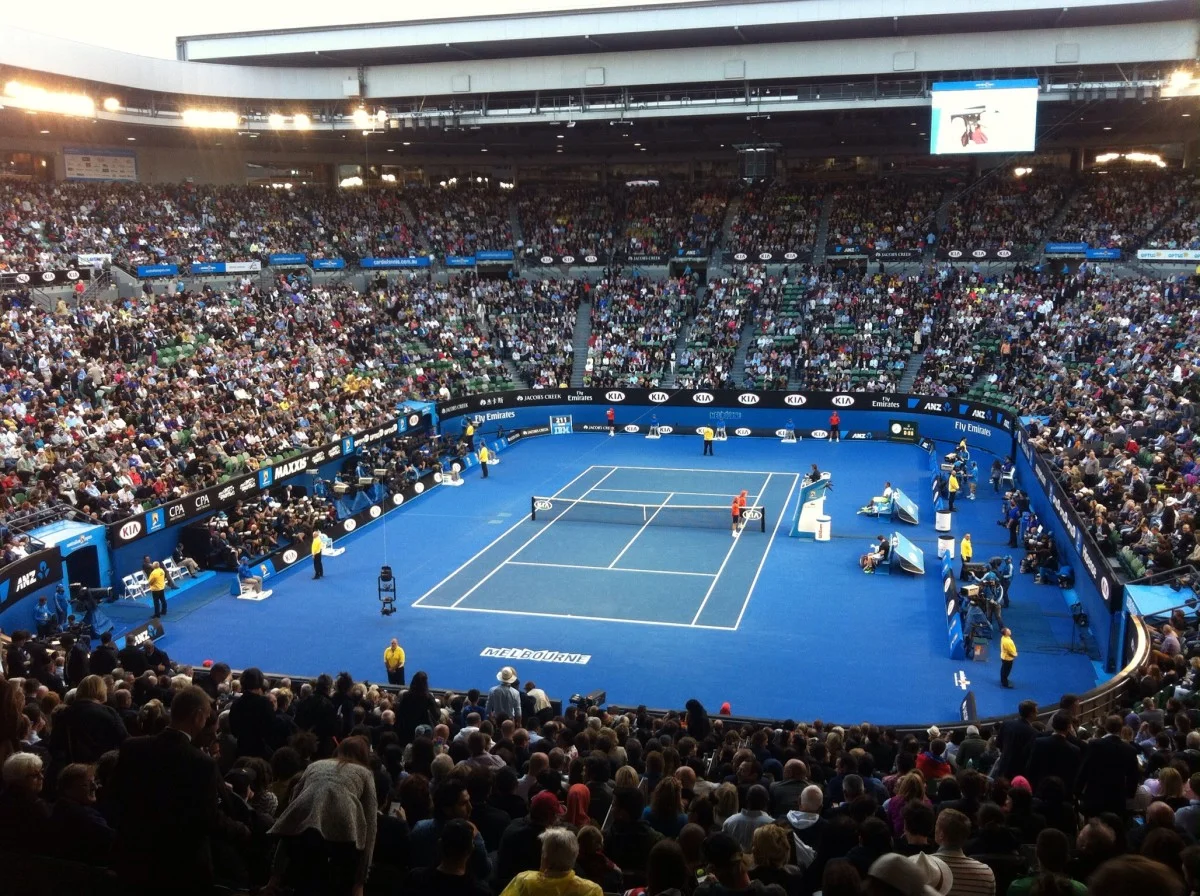
Mirra Andreeva delivered a stunning performance in Melbourne, dismantling Maria Sakkari 6-0, 6-4 to advance to the Australian Open third round. The Russian teenager swept the first eight games in a dominant display that left the former world No. 3 reeling. Meanwhile, Coco Gauff served her way past Olga Danilovic 6-2, 6-2, and world No. 1 Aryna Sabalenka continued her pursuit of a third consecutive Melbourne title with a commanding win over qualifier Zhuoxuan Bai.
Andreeva's masterclass stuns Sakkari
The most eye-catching result of the day came from 17-year-old Mirra Andreeva, who produced a clinic against Maria Sakkari. The Russian's dominance was evident from the opening game as she swept through the first set without dropping a game, leaving the Greek scrambling for answers. Andreeva's pressure point statistics tell the story of her composure - winning 9 of 13 serve pressure points while capitalizing on 11 of 18 return opportunities. Despite Sakkari mounting some resistance in the second set, saving 3 of 4 break points faced, Andreeva's early advantage proved insurmountable. The teenager's ability to maintain her level throughout the match showcased the maturity that has made her one of the tour's most promising young talents.
Gauff serves her way to victory
Coco Gauff reached the Australian Open third round for the fourth consecutive year with a professional 6-2, 6-2 victory over Olga Danilovic. The American's serve was the defining weapon, winning an impressive 84% of first serve points while adding new dimensions to her game. Gauff showcased improved drop shot technique throughout the match, crediting her practice sessions for the tactical evolution. Her dominance under pressure was evident, converting 5 of 17 break point opportunities while saving crucial moments when needed. The No. 3 seed's ability to close out points efficiently on Margaret Court Arena demonstrated the championship mindset that carried her to the 251st victory of her career at just 20 years old.
Sabalenka maintains perfect start
World No. 1 Aryna Sabalenka began her title defense with authority, dispatching qualifier Zhuoxuan Bai 6-3, 6-1 in commanding fashion. The Belarusian's pursuit of a third consecutive Australian Open crown got off to an ideal start as she controlled proceedings from the baseline. Sabalenka's serve proved too powerful for the Chinese qualifier, firing 4 aces while winning 13 of 15 serve pressure points to demonstrate her mental fortitude. Her return game was equally impressive, breaking serve five times from twelve opportunities. The defending champion's consistency in major tournaments over the past three years has been remarkable, and this opening performance suggested she remains the player to beat in Melbourne.
Potapova eliminates Raducanu
Anastasia Potapova ended Emma Raducanu's Australian Open campaign with a hard-fought 7-6(3), 6-2 victory. The Russian seized control after a competitive first set tiebreak, using her aggressive baseline game to overwhelm the former US Open champion. Potapova's pressure point conversion was crucial, winning 12 of 21 serve pressure points while capitalizing on return opportunities when Raducanu faltered. The second set saw the momentum swing decisively in Potapova's favor as she converted 6 of 8 break point chances. For Raducanu, it marked another early exit at a major tournament as she continues to rebuild her career following injury struggles.
Paolini advances in straight sets
Jasmine Paolini moved smoothly into the third round with a 6-2, 6-3 victory over Magdalena Frech. The Italian's consistency proved the difference as she won 66% of first serve points while maintaining pressure on the Polish player's delivery. Paolini's ability to save crucial break points was impressive, winning 11 of 14 opportunities to stay on serve. Her return game was equally effective, converting 6 of 10 break point chances to control the match flow. The eighth seed's professional performance continued her strong start to the 2026 season as she seeks to build on her breakthrough 2025 campaign that included two Grand Slam finals.
Mboko continues impressive run
Victoria Mboko reached her best Grand Slam result with a 6-4, 6-3 victory over Caty McNally. The teenager's composure under pressure was evident as she won 11 of 18 serve pressure points while staying aggressive on return with 13 of 22 pressure point conversions. Mboko's ability to convert break point opportunities at crucial moments proved decisive, winning 5 of 10 chances against the American. The rising star's breakthrough continues a remarkable journey that has seen her establish herself among the tour's most promising young talents. Her solid baseline game and mental toughness suggest this third-round appearance may be just the beginning of her Grand Slam success.
Svitolina overcomes slow start
Elina Svitolina found her rhythm after a competitive opening set to defeat qualifier Linda Klimovicova 7-5, 6-1. The Ukrainian struggled initially against her spirited opponent but elevated her level significantly in the second set. Svitolina's serve became increasingly dominant as the match progressed, winning 77% of first serve points while firing 3 aces. Her return game proved devastating in the second set as she broke serve repeatedly to pull away. The former world No. 3's experience showed in the pressure moments, winning 11 of 16 serve pressure points while converting 4 of 6 break opportunities. Her ability to raise her level when needed demonstrated why she remains a dangerous floater in any draw.
Muchova survives three-set battle
Karolina Muchova showed her fighting spirit to overcome Alycia Parks 4-6, 6-4, 6-4 in a compelling three-set encounter. After dropping the opening set, the Czech player gradually found her range to turn the match around. Muchova's ability to handle pressure situations proved crucial, winning 26 of 39 serve pressure points throughout the contest. Her resilience on serve kept her in contention even when trailing, saving 9 of 12 break points faced. The turning point came in the second set as Muchova began to dictate play from the baseline, using her variety and court craft to unsettle Parks. The former Wimbledon semifinalist's victory demonstrated the quality that has made her such a dangerous player when healthy.
With the second round now complete, the Australian Open third round promises more compelling matchups as the remaining seeds look to continue their title pursuits in Melbourne.
Looking ahead to Thursday
World No. 2 Iga Swiatek headlines Thursday's Australian Open second round action as she faces Czech veteran Marie Bouzkova in what promises to be a stern test of the Polish star's Melbourne credentials. Fifth seed Elena Rybakina also features prominently as she takes on Varvara Gracheva, while Amanda Anisimova makes her first second-round appearance at Melbourne Park since 2022 against doubles specialist Katerina Siniakova. Former world No. 1 Naomi Osaka continues her Australian Open comeback journey against seasoned campaigner Sorana Cirstea.
Polish power meets Czech precision
Iga Swiatek's 74.5% hard court winning record over the past year tells the story of a player who has successfully adapted her clay court dominance to faster surfaces, but Marie Bouzkova presents exactly the type of crafty veteran who can exploit any momentary lapses in concentration. The Czech leads their limited head-to-head series... well, she doesn't – Swiatek has won both previous encounters, including a straight-sets victory in Wuhan just three months ago.
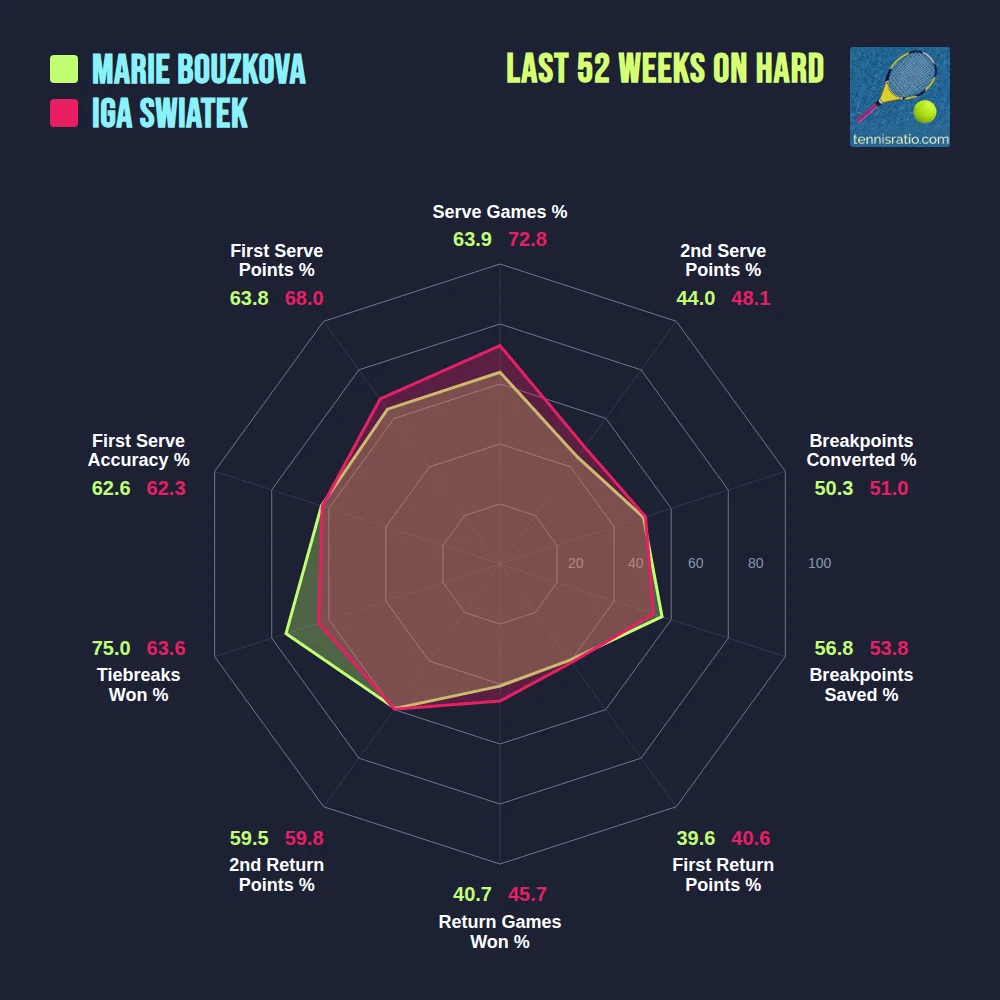
The statistical comparison reveals Swiatek's superior firepower, with 3.1 aces per match compared to Bouzkova's 2.1, and a commanding 68.0% of first serve points won. However, Bouzkova's 75.0% tiebreak record this year compared to Swiatek's 63.6% suggests the Czech could be dangerous if she can extend sets. Swiatek's recent form shows some vulnerability, going 6-4 in her last 10 matches, while her 53.8% break point saving percentage indicates potential pressure point concerns. Bouzkova's superior return statistics against second serves (59.5% vs 59.8%) keep this closer than the rankings suggest.
Anisimova's Melbourne breakthrough bid
Fourth seed Amanda Anisimova enters uncharted territory as she faces Katerina Siniakova in their first career meeting, with the American seeking to capitalize on her highest seeding at a Grand Slam. Anisimova's 74.3% hard court record over the past year demonstrates the consistency that has propelled her back into the top five, while her 3.7 aces per match provide a potent weapon on Melbourne's quick courts.
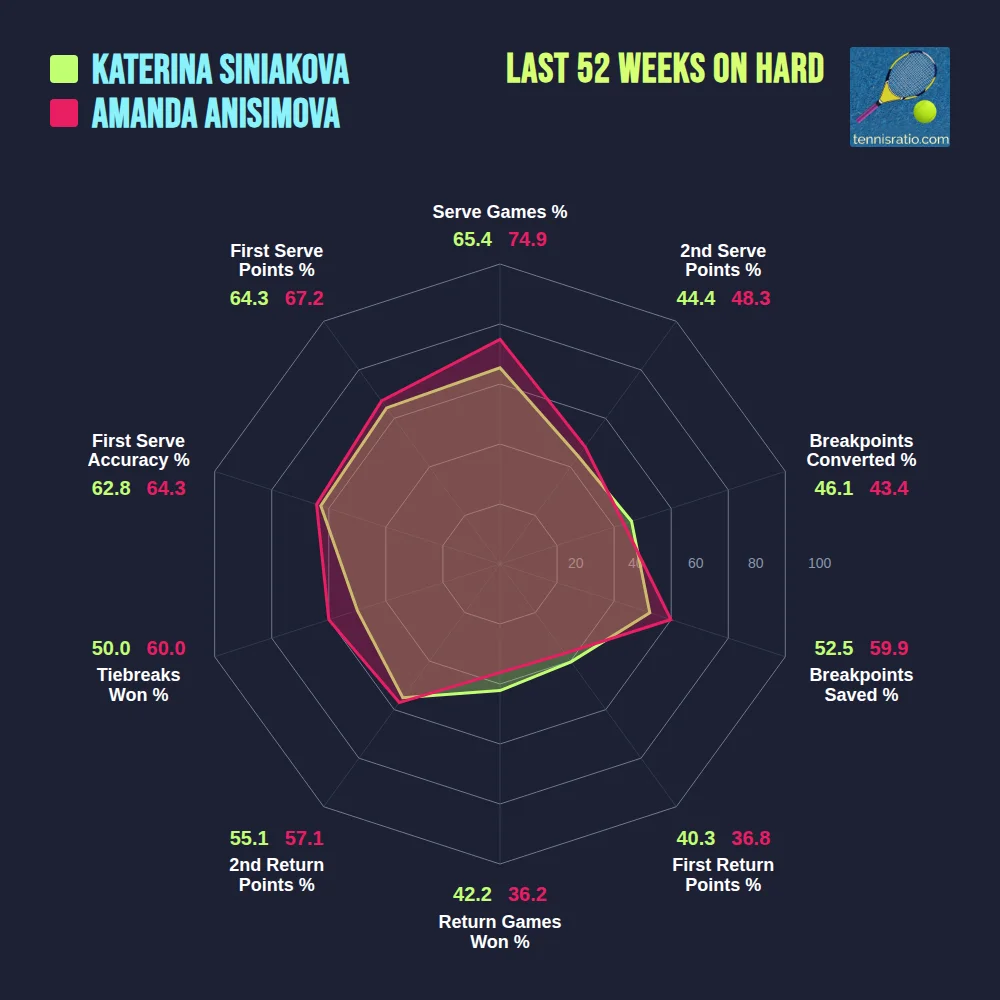
Siniakova arrives with momentum, posting a 7-3 record in her last 10 matches, but her 4.3 double faults per match could prove costly against an opponent who converts 48.9% of break point opportunities under pressure. Anisimova's 60.7% serve pressure rating – showing how well she saves break points in crucial moments – gives her a significant edge in tight situations. The Czech's superior tiebreak record this year won't matter if she can't force them against Anisimova's 67.2% first serve points won.
Rybakina's power game against French resilience
Elena Rybakina's intimidating 7.5 aces per match average makes her one of the most feared servers in women's tennis, and Varvara Gracheva faces the unenviable task of trying to neutralize that weapon having won both previous meetings, including at Indian Wells in 2023. Rybakina's exceptional 9-1 record in her last 10 matches, combined with her 75.6% first serve points won, suggests she's peaking at the right moment.
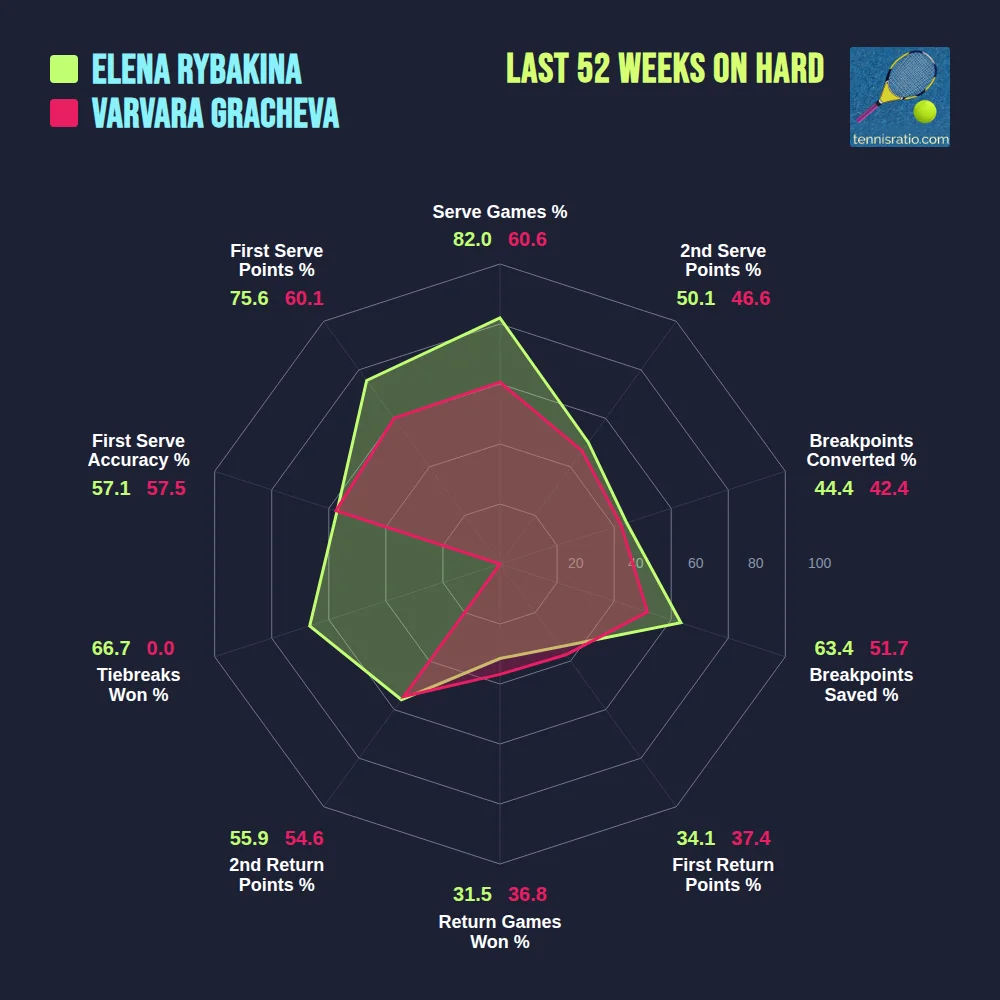
Gracheva's 0-4 tiebreak record this year presents a major concern against an opponent who excels in extended sets, winning 66.7% of tiebreaks over the past 12 months. The French player's 5.0 double faults per match and 49.4% serve pressure rating under break points indicate vulnerability against Rybakina's aggressive return positioning.
Pegula seeks routine progression
Sixth seed Jessica Pegula faces first-time opponent Mccartney Kessler with her superior consistency likely to prove decisive. Pegula's impressive 73.5% hard court record and low 2.1 double faults per match contrast sharply with Kessler's 5-5 record in her last 10 outings.
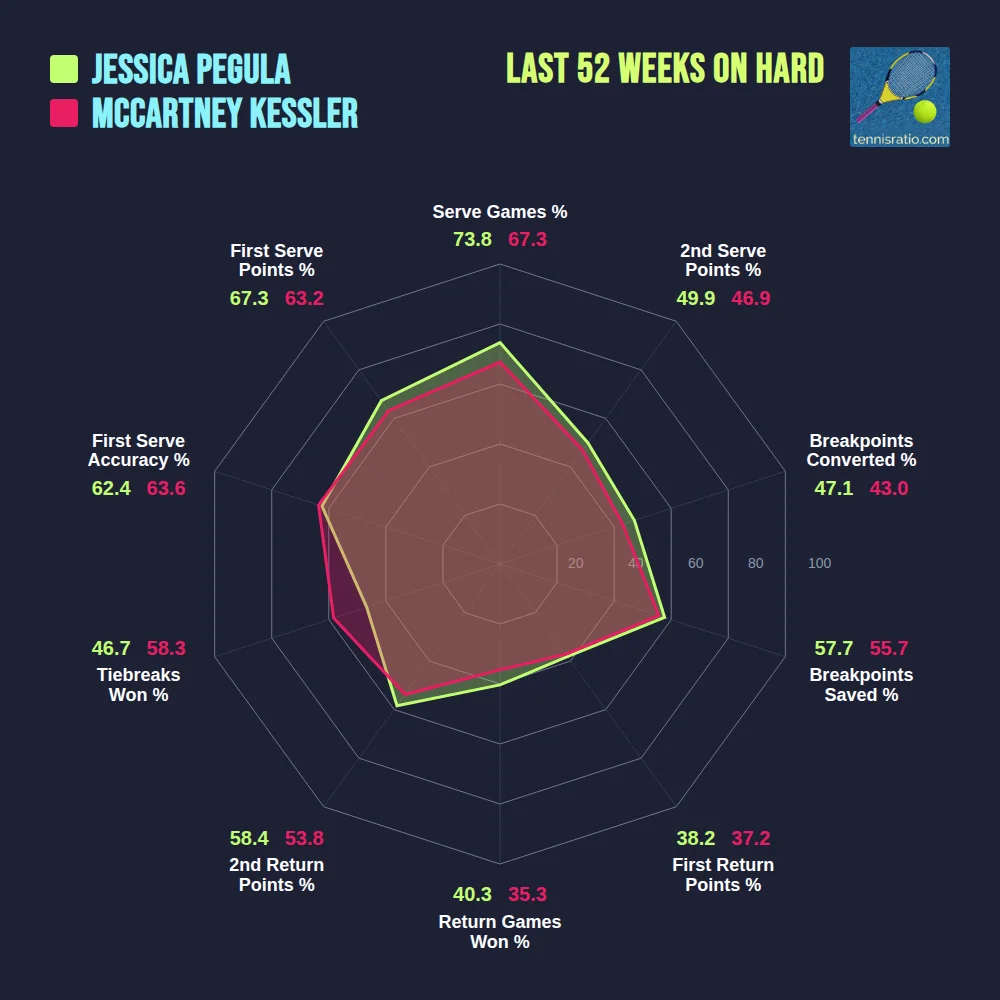
Kessler's 7-5 tiebreak record this year gives her an edge in close sets, but Pegula's 60.3% serve pressure rating shows superior composure when facing break points.
Keys looks to halt alarming slide
Madison Keys desperately needs a confidence-boosting performance after managing just two wins in her last 10 matches, facing Ashlyn Krueger in another first-time meeting. Keys' 72.7% tiebreak record and 4.3 aces per match provide hope, but Krueger's 5.5 aces per match could neutralize that serving advantage.
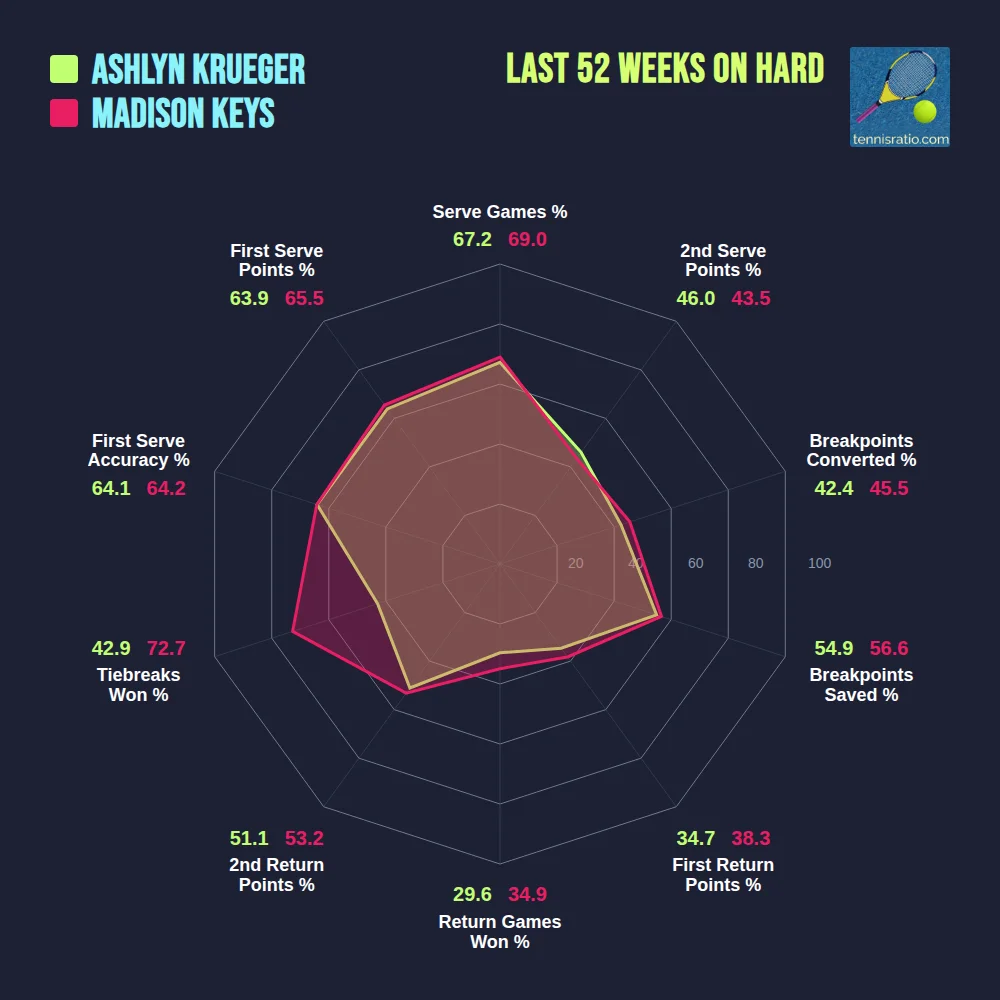
Krueger's concerning 2-8 record in her last 10 matches, combined with 6.0 double faults per match, suggests vulnerability that Keys must exploit to arrest her recent decline.
Osaka's Melbourne memories against veteran craft
Naomi Osaka returns to the scene of her 2019 and 2021 triumphs, facing Sorana Cirstea nearly 11 years after their only previous meeting at Wimbledon 2015, where Cirstea prevailed. Osaka's commanding 6.1 aces per match and 77.8% tiebreak record this year showcase her big-match temperament returning to full effect.
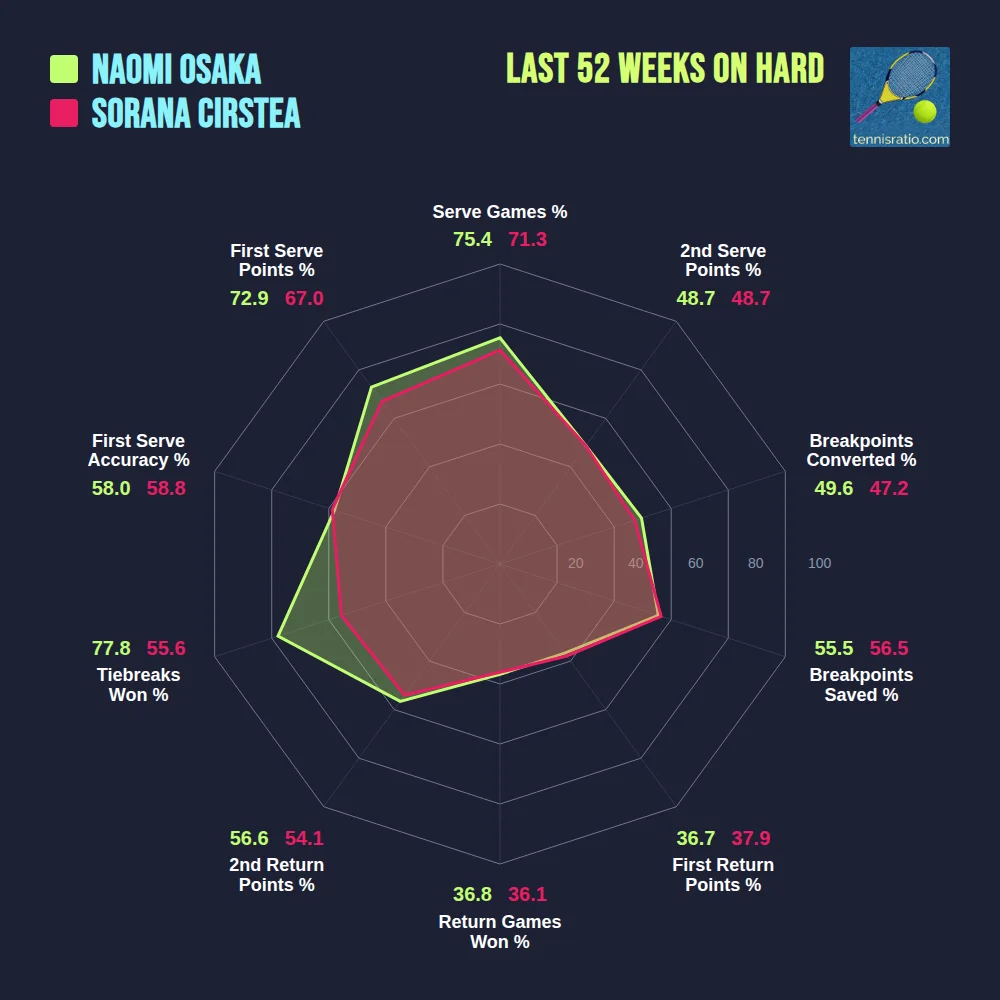
Cirstea arrives with a three-match winning streak and impressive 28-15 hard court record, but her 44.4% return pressure conversion rate may struggle against Osaka's 72.9% first serve points won – among the highest on tour.
Thursday's second round action will significantly shape the tournament landscape, with potential upsets capable of opening unexpected pathways to the business end. The combination of established stars and dangerous floaters makes for compelling viewing across Melbourne Park's showcourts.