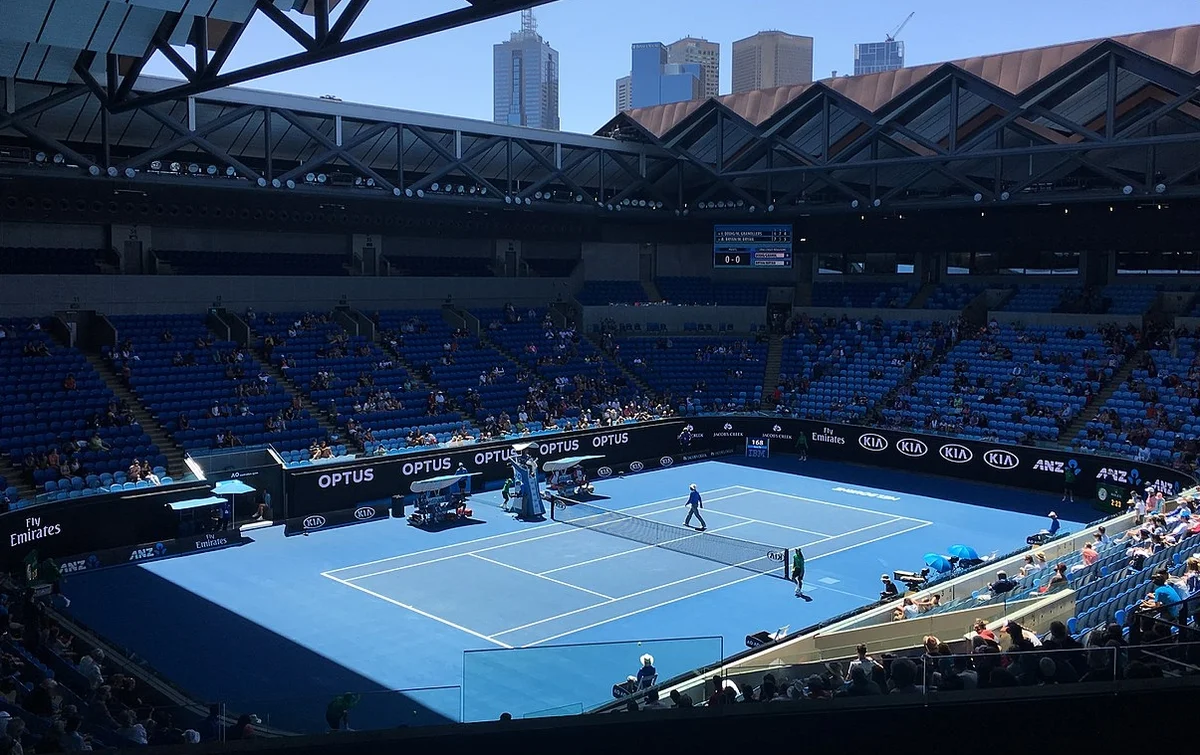
The Australian Open returns to Melbourne Park from January 19-February 1, 2026, with the world number one Aryna Sabalenka leading a major 128-player field on the hard courts. The Belarusian arrives in exceptional form, riding a five-match winning streak and boasting a dominant 38-7 record (84.4%) on hard courts over the past 12 months. The world number one wants to regain the crown in Melbourne after last year's final upset served by Madison Keys. Her main threats come from world No. 2 Iga Swiatek, who despite recent struggles holds a 40-13 hard court record, and rising American Coco Gauff, who enters with momentum after defeating Swiatek at the United Cup. The draw sets up potential blockbuster encounters throughout, with all top seeds avoiding first-round byes in this complete 128-player bracket. Veterans like Jessica Pegula and Elena Rybakina anchor the bottom half, while emerging talents Mirra Andreeva and Linda Noskova could spring surprises in their respective sections.
Quarter 1: Sabalenka begins title defense against dangerous floaters
Top seed Aryna Sabalenka starts her AO campaign against wildcard Tiantsoa Sarah Rakotomanga Rajaonah, a manageable first-round assignment that should ease her into the tournament. The world No. 1's 69.1% first serve points won percentage on hard courts this season reflects her improved consistency, having addressed previous serving woes. However, dangerous floaters lurk throughout this section, none more threatening than Emma Raducanu, who faces Mananchaya Sawangkaew in round one. The 2021 US Open champion has shown flashes of brilliance when healthy, though her 50.7% break points saved rate suggests vulnerability under pressure.
Victoria Mboko presents an intriguing story, having recently defeated Madison Keys in Adelaide before facing local hope Emerson Jones. Her aggressive baseline game could trouble higher seeds if she navigates the opening rounds. Clara Tauson, seeded 14th, carries quality hard court credentials despite a recent four-match losing streak, while Ekaterina Alexandrova brings veteran savvy at the 11th seed. The statistical breakdown reveals Sabalenka's dominance in match efficiency and controlling rallies, while Emma Raducanu shows concerning weaknesses in service games and overall court control that could expose her to early upset risks.
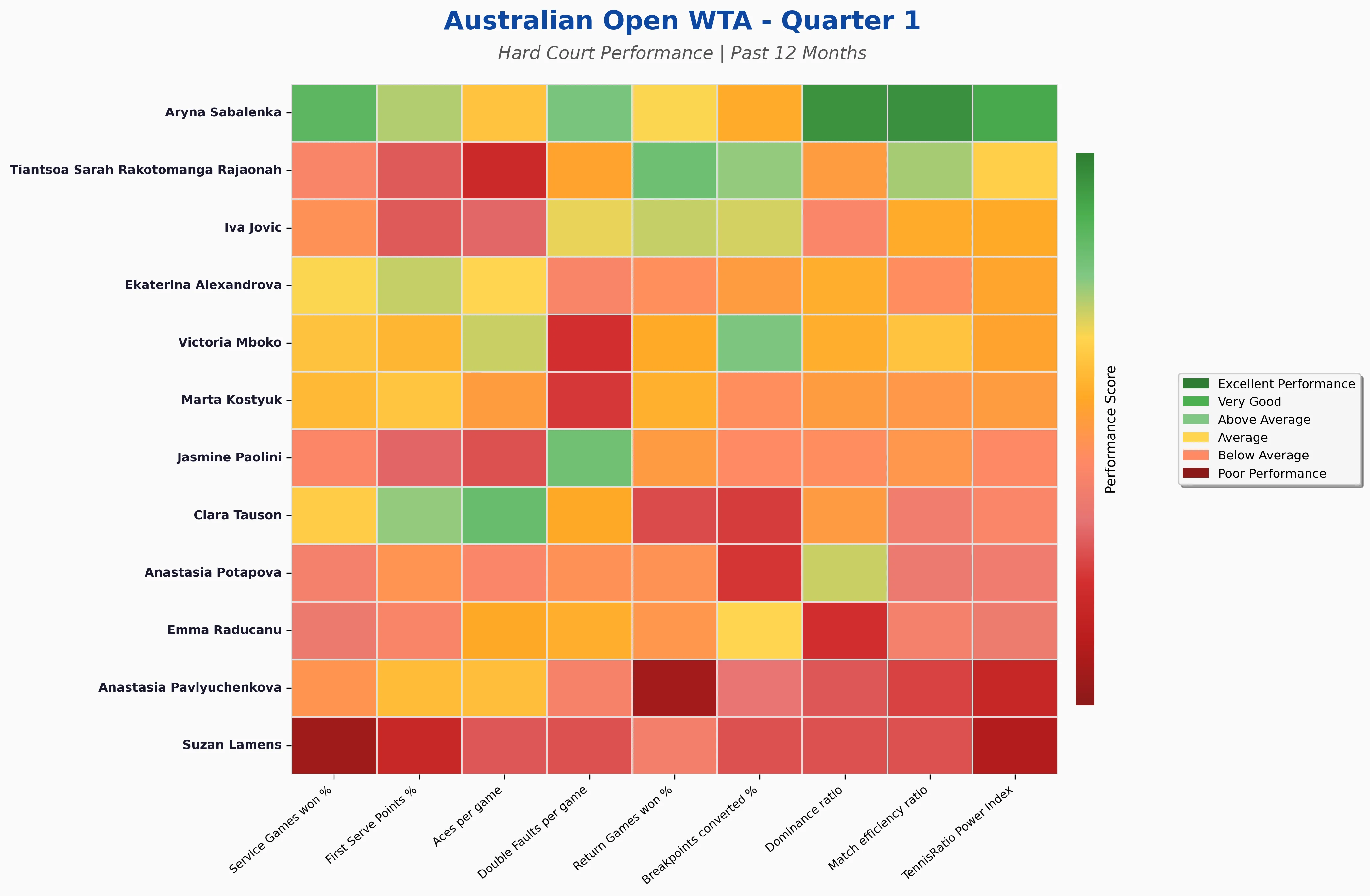
The projected quarterfinal between Sabalenka and seventh seed Jasmine Paolini carries historical significance, with Sabalenka leading their head-to-head 6-2 including a commanding victory in last year's Finals Riyadh. Paolini's 57.8% break points saved percentage suggests she can hang tough in crucial moments, but matching Sabalenka's power from the baseline remains her biggest challenge.
Quarter 2: Gauff and Andreeva headline youth movement
Third seed Coco Gauff faces Kamilla Rakhimova in an opening round matchup that should favor the American's aggressive return game, having won 41.1% of opponent first serve points this season. Gauff's 7-2 tiebreak record demonstrates her clutch gene in pressure moments, a valuable asset in potential three-set battles ahead. The 20-year-old American has found her groove recently, defeating both Iga Swiatek and Maria Sakkari at the United Cup to announce her Grand Slam intentions.
Eighth seed Mirra Andreeva opens against Donna Vekic in what promises to be a compelling contrast of styles. The 17-year-old Russian has compiled an impressive 6-3 record against top 10 opponents over the past year, showcasing maturity beyond her years. Her recent victories over Maya Joint and Marie Bouzkova in Adelaide highlight her hard court comfort. Elina Svitolina enters as the 12th seed on a five-match winning streak, having captured the Auckland title with victories over quality opposition. The analysis shows Mirra Andreeva excelling in controlling rallies and converting opportunities efficiently, while Elina Svitolina stands out with strong first serve effectiveness and return game prowess. Karolina Muchova brings additional quality despite injury concerns, displaying excellent service game control when healthy.
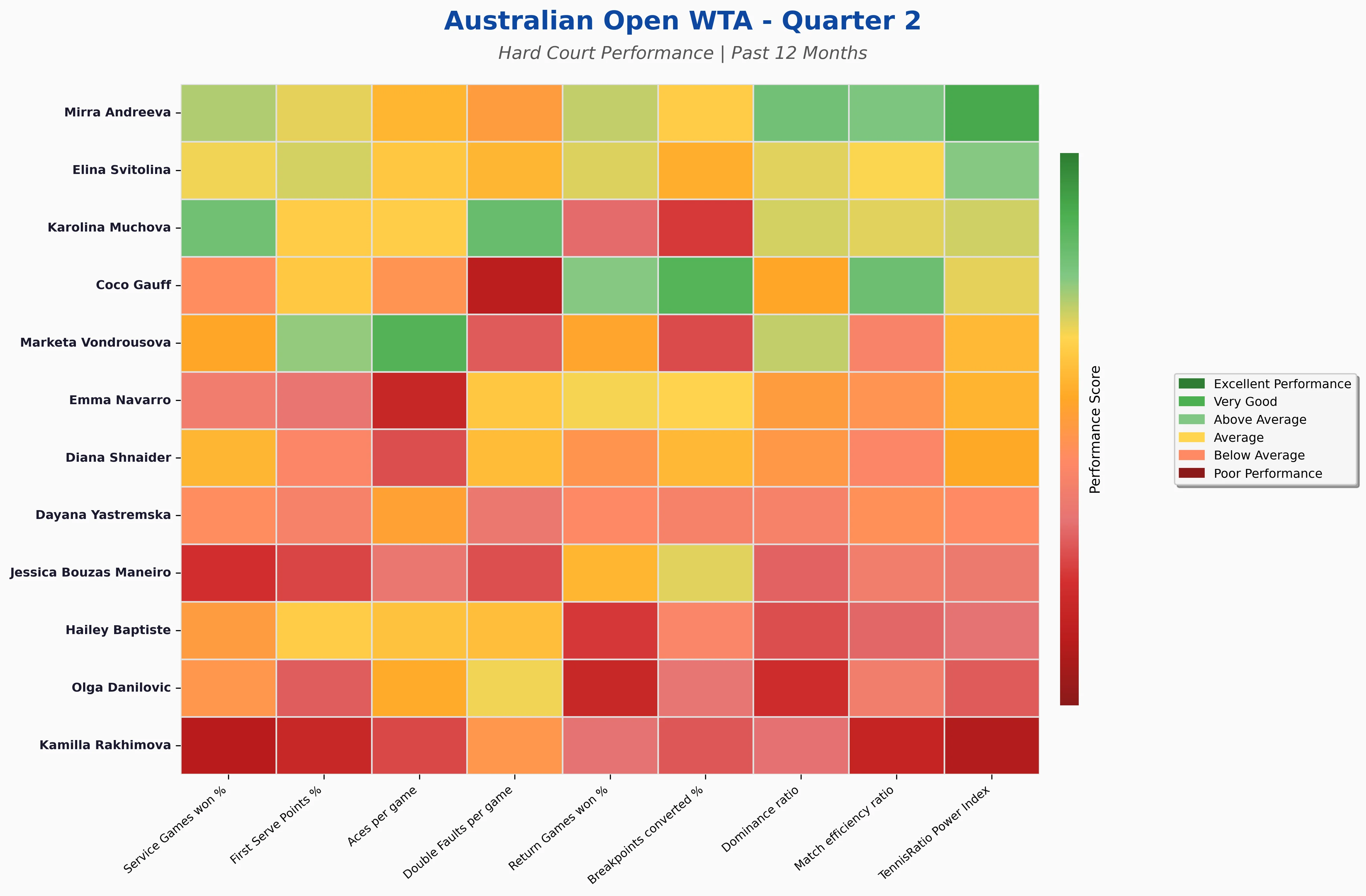
A potential Gauff-Andreeva quarterfinal would pit two of tennis's brightest young stars, with Gauff holding a perfect 4-0 head-to-head record. However, both face challenging paths through dangerous unseeded opponents and experienced veterans seeking breakthrough runs.
The projected top half semifinal between Sabalenka and Gauff promises fireworks, with their rivalry knotted at 6-6. Sabalenka claimed their most recent encounter at the Finals Riyadh, but Gauff's improved serve and return combination makes her a genuine threat to the defending champion's crown.
Quarter 3: Anisimova leads American charge in competitive section
Fourth seed Amanda Anisimova gets a tricky opener against Simona Waltert, with the American carrying a solid 26-10 hard court record and 10-5 mark against top 10 players over the past 12 months. Anisimova's 58.4% break points saved percentage reflects improved mental toughness, though her recent loss to Marta Kostyuk in Brisbane suggests some vulnerability against aggressive opponents. The American's powerful groundstrokes and improved court positioning make her a legitimate title contender.
Jessica Pegula, seeded sixth, opens against Anastasia Zakharova with expectations of advancing deep into the second week. Despite a disappointing 7-9 tiebreak record this season, Pegula's overall game remains solid with 37-14 hard court results. Madison Keys is there as the reigning champion, though her recent struggles including a loss to Victoria Mboko raise questions about her current form. Linda Noskova brings big-serving potential as the 13th seed, averaging 6.1 aces per match on hard courts this season. The heatmap data reveals Amanda Anisimova and Jessica Pegula as standout performers in controlling match dynamics, while Linda Noskova impresses with her serving power and first serve effectiveness.
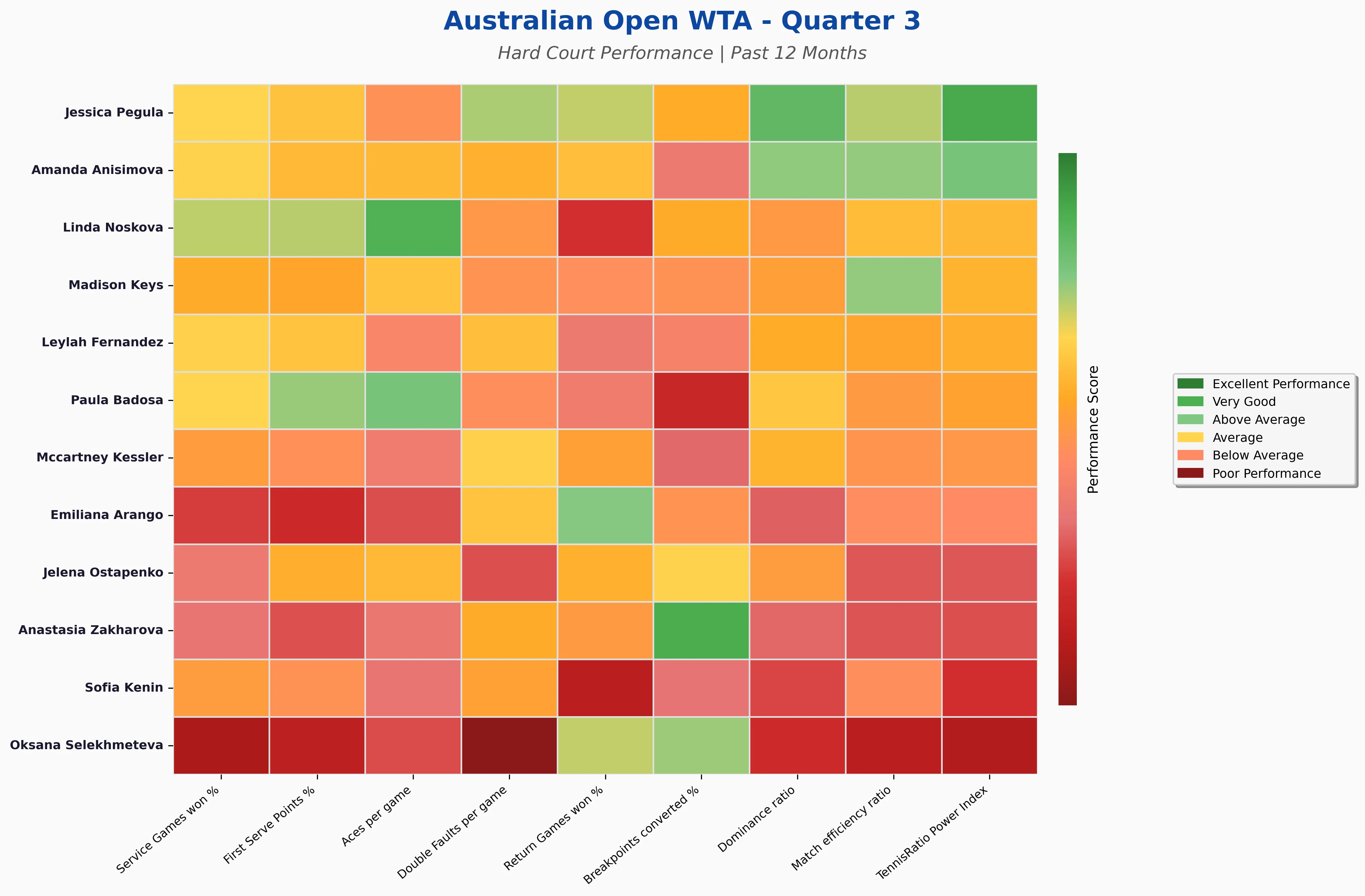
The projected Anisimova-Pegula quarterfinal would be an all-American affair featuring contrasting styles, with Anisimova's aggressive baseline power meeting Pegula's tactical variety and court craft. Their potential meeting could determine American hopes in the bottom half.
Quarter 4: Swiatek seeks redemption in loaded section
Second seed Iga Swiatek opens against qualifier Yue Yuan carrying recent scars from her United Cup losses to Belinda Bencic and Coco Gauff. The Polish star's 40-13 hard court record remains impressive, but her 8-8 mark against top 10 players suggests struggles against elite competition. Swiatek's 41.1% return points won against first serves highlights her ability to create break chances, essential for navigating a dangerous section.
Fifth seed Elena Rybakina faces Kaja Juvan in round one, with the Kazakhstani's 75.9% hard court win percentage ranking among the field's best. Her 7.4 aces per match average provides immediate pressure on opponents' service games, though questions remain about her consistency after the Brisbane semifinal loss to Karolina Muchova. Belinda Bencic enters as the tenth seed riding an 11-match winning streak, having defeated both Swiatek and elite opposition at the United Cup. Naomi Osaka adds former Grand Slam champion pedigree at the 16th seed, possessing the power and experience to trouble any opponent on her preferred hard courts. The statistical analysis shows Iga Swiatek dominating return games and controlling rallies effectively, while Elena Rybakina excels in service game control and first serve potency. Belinda Bencic brings exceptional match-finishing ability and minimal unforced errors to complement this loaded section.
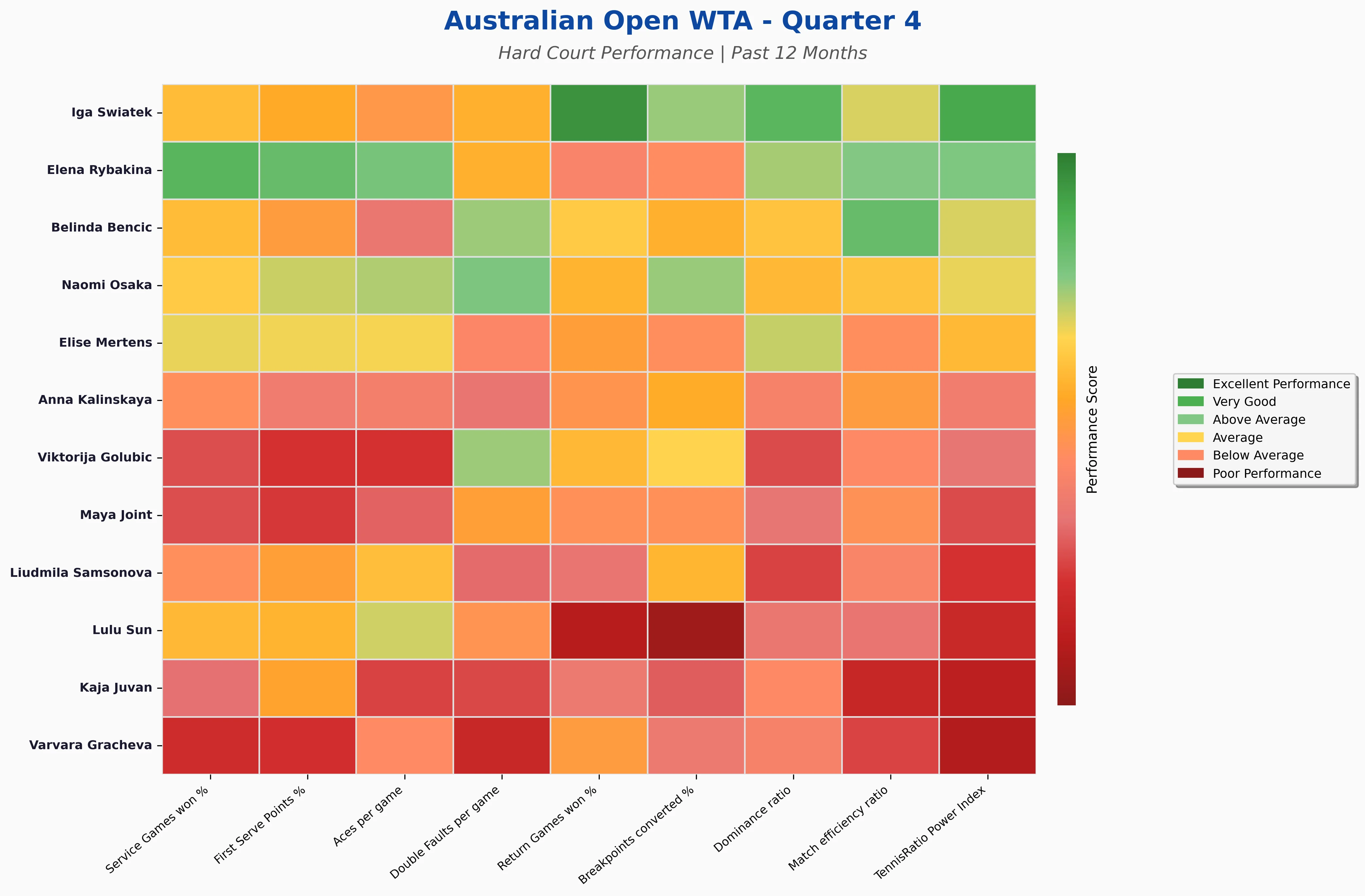
The projected Swiatek-Rybakina quarterfinal represents a clash of contrasting styles, with Swiatek's defensive brilliance meeting Rybakina's explosive power. Their head-to-head sits at 3-1 in Swiatek's favor, though Rybakina claimed their most recent hard court encounter.
A potential bottom half semifinal between Swiatek and Anisimova would feature two players seeking Australian Open breakthrough moments, with both possessing the weapons to trouble Sabalenka in a potential final showdown.
Aryna Sabalenka enters as the overwhelming favorite to successfully defend her Melbourne crown, with her improved serving consistency and dominant hard court form making her the player to beat. The most likely final matchup pits Sabalenka against Swiatek in a rematch of recent classics, though don't overlook Amanda Anisimova as a potential dark horse capable of claiming her first Grand Slam title with her explosive power game clicking on the hard courts of Melbourne Park.